

Application Chemical Storage
Fiberglass Chemical Storage Tanks
Eliminate Corrosion Risks with High-Performance Fiberglass Chemical Storage Tanks
Our fiberglass chemical storage tanks are engineered to solve these volatility issues at the molecular level. By utilizing advanced Fiber Reinforced Plastic (FRP) technology, these vessels provide an inert, non-corrosive environment that stands up to the harshest pH swings and thermal loads. Unlike generic storage options, our fiberglass chemical tanks feature a specialized internal corrosion barrier designed specifically for your chemical’s concentration and temperature profile. Whether you are managing bulk sulfuric acid, sodium hypochlorite, or caustic soda, our tanks provide a high-integrity containment solution that protects your personnel and your bottom line.
Fiberglass Chemical Storage Tanks
Eliminate Corrosion Risks with High-Performance Fiberglass Chemical Storage Tanks
Our fiberglass chemical storage tanks are engineered to solve these volatility issues at the molecular level. By utilizing advanced Fiber Reinforced Plastic (FRP) technology, these vessels provide an inert, non-corrosive environment that stands up to the harshest pH swings and thermal loads. Unlike generic storage options, our fiberglass chemical tanks feature a specialized internal corrosion barrier designed specifically for your chemical’s concentration and temperature profile.
Which industrial applications require fiberglass chemical tanks?
In the United States, industrial and municipal sectors rely on fiberglass reinforced chemical holding tank solutions for high-volume storage of volatile substances. Because fiberglass can be customized with specific resin liners, it is the preferred choice for a wide range of aggressive chemical streams.
Which industrial applications require fiberglass chemical tanks?
In the United States, industrial and municipal sectors rely on fiberglass reinforced chemical holding tank solutions for high-volume storage of volatile substances. Because fiberglass can be customized with specific resin liners, it is the preferred choice for a wide range of aggressive chemical streams.

Which Fiberglass Chemical Tank Configuration is Right for Your Facility?

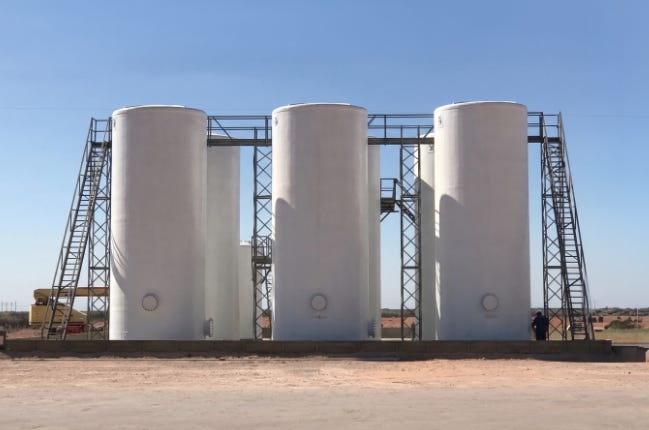
For facilities with dedicated chemical storage yards, high-clearance process buildings, or strict indoor containment dikes, above ground vertical vessels represent the industrial gold standard. A vertical fiberglass chemical tank design minimizes the structural footprint on the factory floor while providing complete, efficient bottom drainage through flat, sloped, or dish-bottom configurations. Finished with an opaque, UV-stabilized exterior gel coat, these vertical fiberglass chemical storage tanks resist aggressive sun exposure, atmospheric corrosion, and chemical overspray without requiring the constant repainting or sacrificial anodes that steel installations demand.

When overhead clearance is restricted by piping runs, crane rails, or low ceilings, horizontal configurations provide the perfect low-profile solution. Above ground horizontal fiberglass chemical tanks distribute liquid weight over a larger surface area, making them highly stable choices for regions prone to high wind or seismic activity. These vessels are factory-outfitted with integrated, heavy-duty FRP saddles or steel support cradles to ensure perfect load distribution, allowing for simplified manifolding and direct access to top-mounted inspection manways and venting systems.
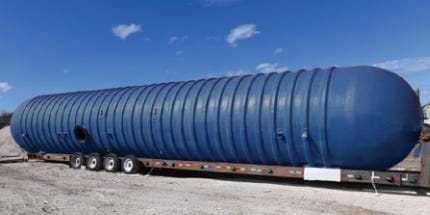
Maximize valuable surface real estate and achieve built-in thermal insulation by moving your hazardous material containment completely below grade. Our underground fiberglass reinforced chemical tank systems are engineered with heavy-duty structural ribs to easily withstand intense lateral soil pressures and high groundwater tables. When specified for installation beneath active loading docks, facility access roads, or parking areas, these systems are constructed as H-20 traffic rated vessels to bear heavy vehicle axle loads safely out of sight, while providing seamless protection against groundwater contamination.
A vertical fiberglass chemical tank design minimizes the structural footprint on the factory floor while providing complete, efficient bottom drainage through flat, sloped, or dish-bottom configurations.
Above ground horizontal fiberglass chemical tanks distribute liquid weight over a larger surface area, making them highly stable choices for regions prone to high wind or seismic activity.
Our underground fiberglass reinforced chemical tank systems are engineered with heavy-duty structural ribs to easily withstand intense lateral soil pressures and high groundwater tables.
How does fiberglass tank chemical resistance compare to other materials?
The superior performance of a fiberglass reinforced chemical holding tank is not accidental; it is a result of advanced material science. While steel and polyethylene (poly) are common in light-duty applications, they often fall short in demanding chemical environments.

Resin-Rich Corrosion Barrier
Unlike a "poly" tank which is a single material, an FRP tank features a dedicated interior "veil" or corrosion barrier. This resin-rich layer is engineered to be chemically inert to specific substances, preventing the liquid from ever reaching the structural glass layers.

Vinyl Ester vs. Polyester Resins
We offer tanks manufactured with premium Vinyl Ester resins, which provide significantly higher resistance to alkalis, acids, and oxidizing chemicals than the standard polyester resins used in water tanks. This makes fiberglass tank chemical resistance vastly superior for industrial-grade reagents.

Elimination of Stress Cracking
High-density polyethylene (HDPE) tanks are susceptible to environmental stress cracking, especially when exposed to UV light and aggressive chemicals simultaneously. Fiberglass is structurally stable and does not become brittle or "yellow" over time, ensuring a service life of 30+ years.

Zero-Maintenance Exterior
Beyond the interior fiberglass tanks chemical compatibility, the exterior is naturally resistant to corrosive industrial atmospheres, salt-laden air, and chemical overspray, eliminating the need for the expensive repainting and sandblasting cycles required by steel tanks.
Whether you need to fit bulk storage into a cramped indoor mechanical bay or take hazardous materials safely below grade, we provide the precise engineering geometries required to secure your operations.
Whether you need to fit bulk storage into a cramped indoor mechanical bay or take hazardous materials safely below grade, we provide the precise engineering geometries required to secure your operations.

What are the engineering standards for industrial fiberglass chemical tanks?
Designing a fiberglass reinforced chemical tank requires more than just picking the right resin; it involves strict adherence to structural engineering codes that account for hydraulic pressure, soil loads, and seismic activity.
How do I choose the right resin for my fiberglass chemical tank?
Selecting the correct resin is the most critical step in ensuring long-term fiberglass tank chemical compatibility. While thermoplastic tanks are limited by their base material, FRP tanks can be custom-layered with specific resin chemistries to match the pH and temperature of the stored medium.
| Resin Type | Best For | Max Temp (Approx.) | Key Advantage |
| Premium Vinyl Ester | Concentrated Acids, Alkalis, & Bleach | 210°F - 250°F | Maximum corrosion resistance; handles aggressive oxidizers like Sodium Hypochlorite |
| Novolac Vinyl Ester | Solvents & High-Temperature Acids | 250°F - 300°F | Superior resistance to aromatic solvents and high-heat chemical processes |
| Bisphenol-A Fumarate | Strong Bases & Corrosive Vapors | 200°F - 230°F | Specifically engineered for high-alkaline environments and chlorine gas |
| Isophthalic Polyester | Mild Acids & Water Treatment | 120°F - 150°F | Cost-effective for secondary chemicals and industrial water with low acidity |
Pro Tip: Always verify the specific concentration of your reagent. A resin that handles 10% Sulfuric Acid may require an upgrade to Premium Vinyl Ester for 98% concentration.
Buying Guide: How to Source and Scale Industrial Chemical Tanks
Procuring a fiberglass reinforced chemical holding tank involves more than just selecting a capacity. For high-stakes industrial environments, the decision-making process must account for chemical density, site access, and long-term compliance.


Secure Your Operations with Engineering-Grade FRP Chemical Containment
Don’t leave your chemical storage to chance. Whether you are replacing a failing steel vessel or designing a new municipal treatment plant, our team of specialists is ready to provide the technical submittals and competitive pricing you need to move forward.
Secure Your Operations with Engineering-Grade FRP Chemical Containment
Don’t leave your chemical storage to chance. Whether you are replacing a failing steel vessel or designing a new municipal treatment plant, our team of specialists is ready to provide the technical submittals and competitive pricing you need to move forward.


