

Application Fertilizer Storage
Fiberglass Liquid Fertilizer Tanks
How do you prevent corrosion and leaks in bulk liquid fertilizer storage?
Fiberglass liquid fertilizer tanks provide the definitive solution to this industrial challenge. By utilizing advanced resin chemistries, these vessels offer an inert environment that ignores the corrosive nature of liquid nutrients. Choosing Fiberglass Reinforced Plastic (FRP) transforms your storage from a depreciating asset into a permanent piece of infrastructure, ensuring that your bulk fertilizer storage remains compliant and leak-free for decades.
Fiberglass Liquid Fertilizer Tanks
How do you prevent corrosion and leaks in bulk liquid fertilizer storage?
Fiberglass liquid fertilizer tanks provide the definitive solution to this industrial challenge. By utilizing advanced resin chemistries, these vessels offer an inert environment that ignores the corrosive nature of liquid nutrients.
Where are industrial frp ag tanks utilized in commercial distribution?
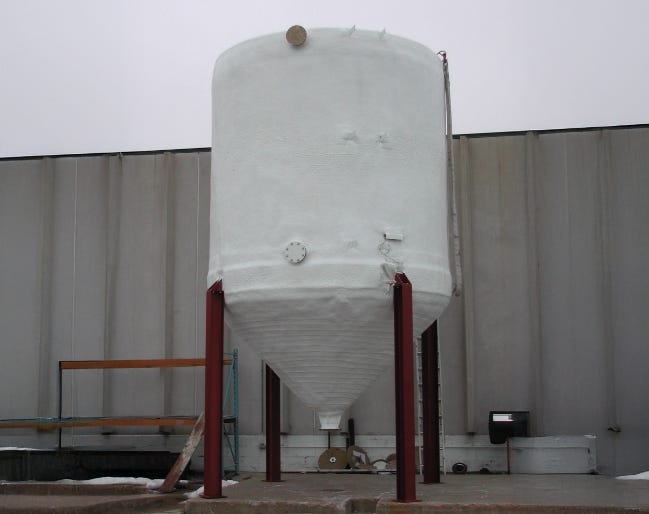
Commercial fiberglass liquid fertilizer tanks are engineered for high-cycle loading and unloading, making them the standard for facilities that move large volumes of product. These aren't temporary farm-field assets; they are the backbone of regional nutrient logistics.
Where are industrial frp ag tanks utilized in commercial distribution?
Commercial fiberglass liquid fertilizer tanks are engineered for high-cycle loading and unloading, making them the standard for facilities that move large volumes of product. These aren't temporary farm-field assets; they are the backbone of regional nutrient logistics.

Which fiberglass tank configurations are available for industrial ag and fertilizer systems?
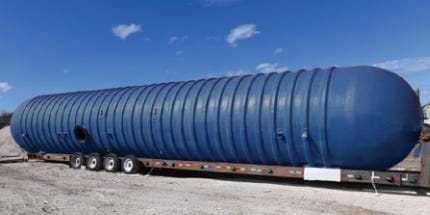
Vertical designs represent the industrial benchmark for maximizing storage volume while minimizing the containment basin footprint, utilizing flat or dished bottoms for complete, high-volume drainage. Horizontal fiberglass liquid fertilizer tanks offer a low-profile alternative where overhead clearance is restricted by facility rooflines or conveyors, distributing massive fluid weights over a broader surface area for exceptional stability in high-wind or seismic zones.
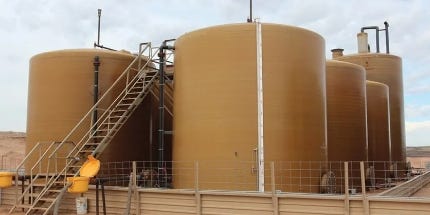
When engineered for placement beneath active loading zones, facility access roads, or containment yards, these underground vessels are manufactured to support H-20 traffic loads safely out of sight. Moving infrastructure below grade also provides built-in thermal insulation, preventing complex liquid nutrient blends from freezing or crystallizing during severe winter conditions.
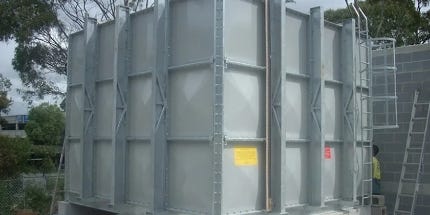
While liquid fertilizer storage requires seamless, monolithic walls to eliminate the risk of chemical weeping across joints, modular panel systems are highly effective for dry ag storage. Constructed from high-pressure molded GRP panels, these modular systems ship flat on pallets to remote agricultural regions and are bolted together directly on-site.
Vertical designs represent the industrial benchmark for maximizing storage volume while minimizing the containment basin footprint, utilizing flat or dished bottoms for complete, high-volume drainage. Horizontal fiberglass liquid fertilizer tanks offer a low-profile alternative where overhead clearance is restricted by facility rooflines or conveyors, distributing massive fluid weights over a broader surface area for exceptional stability in high-wind or seismic zones.
When engineered for placement beneath active loading zones, facility access roads, or containment yards, these underground vessels are manufactured to support H-20 traffic loads safely out of sight. Moving infrastructure below grade also provides built-in thermal insulation, preventing complex liquid nutrient blends from freezing or crystallizing during severe winter conditions.
While liquid fertilizer storage requires seamless, monolithic walls to eliminate the risk of chemical weeping across joints, modular panel systems are highly effective for dry ag storage. Constructed from high-pressure molded GRP panels, these modular systems ship flat on pallets to remote agricultural regions and are bolted together directly on-site.
Why choose fiberglass over steel for bulk fertilizer storage?
When evaluating the total cost of ownership (TCO) for bulk liquid nutrients storage, the material science of the vessel determines your long-term profitability. While carbon steel is an initial lower-cost option, it is fundamentally incompatible with the corrosive nature of modern fertilizers in the long run.

Zero Internal Corrosion
Liquid fertilizers, particularly nitrogen-based solutions, act as electrolytes that accelerate the oxidation of steel. FRP liquid storage is chemically inert, meaning the tank walls never thin or scale over time.

Maintenance-Free Exterior
Unlike steel, which requires sandblasting and specialized coatings every few years to prevent rust, fiberglass is UV-stabilized and corrosion-resistant from the outside in.

Superior Strength-to-Weight Ratio
Despite their massive capacity, industrial ag tanks made of fiberglass are significantly lighter than steel, reducing the cost of heavy machinery during installation and allowing for more flexible site placement.

Chemical Versatility
FRP can be custom-engineered with specific resin liners to handle everything from UAN and phosphoric acid to complex micronutrient blends without the risk of stress-corrosion cracking.
Do not wait for a structural failure or a failed EPA inspection to upgrade your infrastructure. Our technical sales team is ready to help you specify the exact resin, SG rating, and fitting configuration required for your specific nutrient blends.
Do not wait for a structural failure or a failed EPA inspection to upgrade your infrastructure. Our technical sales team is ready to help you specify the exact resin, SG rating, and fitting configuration required for your specific nutrient blends.

How do you size and site industrial fertilizer tanks for logistics?
Investing in fiberglass liquid fertilizer tanks for a commercial facility requires careful planning beyond just gallon capacity. Because these vessels are significant capital assets, the procurement process must account for the physical footprint, chemical density, and the logistics of high-volume product movement.
What technical specifications are required for bulk fertilizer containment?
Engineering a vessel for bulk liquid nutrients requires more than just volume capacity; it requires a precise calculation of chemical weight and resin compatibility. Because liquid fertilizers are significantly denser than water, standard tanks will often fail under the hydrostatic pressure.
| Feature | Specification Requirement | Industrial Benefit |
| Resin Type | Premium Isophthalic or Vinyl Ester | Maximum chemical resistance to UAN and acidic blends |
| Specific Gravity | 1.5 to 1.9 SG Rating | Reinforced wall thickness to handle heavy nutrient loads |
| Compliance | ASTM D3299 / API 12P | Meets rigorous national standards for filament-rolled tanks |
| Containment | 110% Secondary Capacity | Ensures EPA and state-level environmental compliance |
| Fittings | FRP Bolted or Stainless Steel | Eliminates weak points and prevents connection leaks |
The structural integrity of fiberglass liquid fertilizer tanks depends on the glass-to-resin ratio. For commercial agricultural use, we utilize a computer-controlled filament winding process that creates a high-strength, seamless cylinder. This process ensures that the fiber tank can withstand the repeated “fill and draw” cycles common in high-capacity fertilizer blending station storage without developing stress fractures.

Secure Your Facility Infrastructure Today
At Tank Depot, we specialize in providing fiberglass liquid fertilizer tanks that meet the rigorous demands of the American agricultural landscape. From individual blending stations to massive regional distribution hubs, our FRP solutions offer the chemical resistance, structural integrity, and long-term value that modern agribusiness demands.
Secure Your Facility Infrastructure
At Tank Depot, we specialize in providing fiberglass liquid fertilizer tanks that meet the rigorous demands of the American agricultural landscape. From individual blending stations to massive regional distribution hubs, our FRP solutions offer the chemical resistance, structural integrity, and long-term value that modern agribusiness demands.


