


Engineering Resilience: 15 Critical Failures in Emergency Potable Water Storage Systems
The resilience of modern infrastructure is often a deceptive facade, masking a profound vulnerability in the most fundamental requirement for human survival: water. While municipal systems are engineered for high reliability under standard operating conditions, they possess limited elasticity during catastrophic disruptions.
For many organizations and households, the transition from integrated utility reliance to autonomous emergency potable water storage represents a significant shift in risk management. This shift requires a nuanced understanding of microbiology, chemical stability, material science, and structural engineering to ensure that the water remains life-sustaining rather than a source of illness.
The most pervasive error in disaster planning is an adherence to the baseline 72-hour recommendation popularized by early civil defense models. While FEMA and the American Red Cross suggest a three-day minimum water supply for evacuation scenarios, this metric is increasingly viewed by disaster recovery experts as insufficient for shelter-in-place events involving regional infrastructure collapse.
Historical data from the 2021 Texas Winter Storm (Winter Storm Uri) demonstrates this reality: over 1,100 public water systems were compromised, leaving roughly 14.9 million people under boil-water advisories for an average of six to 14 days, with some rural systems failing for over a month.
To achieve true operational continuity, the target must shift from a 3-day survival window to a 30-day resilience window. This guide identifies and dissects fifteen systemic errors in water preparation, offering technical remediations grounded in authoritative standards like NSF/ANSI 61 and historical disaster data. We will begin by analyzing complex requirements for commercial and industrial facilities, then move into the critical tactical adjustments necessary for residential households.
The Recovery Gap After Major Disasters
|
Disaster Event |
Region |
Duration of Water Impairment |
Rationale for Extended Storage |
|
Gulf Coast, USA |
2 Weeks to Months |
Total logistical and pump station collapse. |
|
|
Texas, USA |
1 to 30+ Days |
Grid failure and widespread pipeline rupture. |
|
|
Mississippi, USA |
Recurring/Long-term |
Aging infrastructure and treatment plant failure. |
Industrial & Commercial Disaster Water Storage System Failures
For commercial enterprises, a water outage is not merely an inconvenience; it is a threat to operational continuity and asset integrity. Industrial water strategy must prioritize high-volume reliability and structural safety over basic survival tactics.
1. The 96-Hour Compliance Trap
Many healthcare and institutional facilities adhere to the Joint Commission’s requirement for 96 hours of self-sufficiency. While this satisfies a regulatory checklist, it often ignores the "Island Effect." In regional catastrophes, logistical bottlenecks—such as flooded transit routes or fuel shortages for delivery trucks—can prevent municipal restoration for weeks.
- The Risk: Relying on the 96-hour minimum often leads to a "cliff-edge" failure where operations cease exactly when the community needs them most.
- The Fix: Engineered systems should aim for a 14-to-30-day buffer. This accounts for the time required to establish "Stage 2" emergency logistics (like bulk water hauling contracts).
2. Structural Math & Bearing Pressure for Bulk Water Tanks
A critical engineering error in commercial setups is ignoring the subgrade modulus, the elasticity of the soil and the strength of the concrete slab beneath the tank.
Water has a unit weight of approximately 62.4 lbs/ft³ (8.34 lbs/gal). A 1,000-gallon emergency water storage tank weighs over 8,300 lbs when full. If placed on a standard 4-inch warehouse slab without a reinforced footing, the concentrated load can cause subsidence (sinking) or catastrophic slab cracking.
To ensure safety, engineers must calculate the Bearing Pressure (P):
● W = Total Weight of the Tank + Fluid
● A = Area of the Tank Footprint
|
Foundation/Soil Type |
Estimated Bearing Capacity (psf) |
Max Safe Tank Height (Water) |
|
Bedrock |
10,000+ |
~160 ft |
|
Firm Clay/Sedimentary Soil |
3,000 – 5,000 |
~48 – 80 ft |
|
Soft Clay/Loose Sand |
1,000 – 2,000 |
~16 – 32 ft |
|
Standard Residential Slab |
Variable |
Risk of Cracking |
Pro-Tip: If your emergency water storage tank height exceeds the safe bearing capacity of your floor, you must utilize a broader "load-spreading" base or a dedicated reinforced concrete pad to prevent structural failure.
3. The Auxiliary Demand Oversight: Silent Water Consumers
A frequent mistake in Business Continuity Planning (BCP) is a "drinking-water-only" focus. Large-scale facilities have "silent" water consumers that, if left dry, can cause millions of dollars in equipment damage. When auditing your emergency potable water storage needs, you must account for these three auxiliary drains:
- HVAC & Cooling Towers: Data centers and hospitals rely on evaporative cooling. Without make-up water, chillers will trip, leading to server overheating or the loss of temperature-sensitive medical supplies.
- Fire Suppression Systems: If municipal pressure drops, your building's fire sprinklers may rely on your stored reservoir. If you deplete that reservoir for hygiene, you may violate fire codes and lose insurance coverage during the event.
- Process Cooling: Manufacturing equipment often requires a constant flow of water to dissipate heat. Failing to plan for "process water" can lead to seized machinery and months of downtime for repairs.
The "Water Use Audit" Breakdown: Calculating Multi-Sector Emergency Water Demand
|
Demand Category |
Daily Multiplier (Per Staff/Unit) |
Impact of Failure |
|
Staff Hydration |
1.0 – 2.0 Gallons |
Dehydration, loss of productivity. |
|
Facility Sanitation |
2.0 – 5.0 Gallons |
Biohazard risks, shut down by health inspectors. |
|
HVAC & Cooling Makeup |
Variable (Check Tonnage) |
Equipment shutdown, thermal damage. |
|
Fire Suppression |
NFPA Standard Minimums |
Life safety risk, insurance voidance. |
4. Rigid Plumbing vs. Thermal Stress in Industrial Water Tank Setup
In industrial water installations, a common mechanical failure is the use of rigid PVC or steel piping for direct sidewall connections. While rigid pipes are standard for static municipal plumbing, they are dangerous for high-volume emergency storage tanks.
- The Physics of the Problem: Large tanks are dynamic vessels. As they fill and empty, the walls "breathe" (flex). Furthermore, water is a massive thermal sink; temperature fluctuations cause the tank material and the water itself to expand and contract.
- The Point of Failure: Without flexibility, this movement places extreme torque on the bulkhead fittings (the seals where pipes enter the tank). Over time, this leads to stress fractures, seal degradation, and eventually, a catastrophic leak that drains your entire 1000-gallon emergency water storage tank in minutes.
- The Fix: Install flexible expansion joints or "braided flex hoses" on every inlet and outlet. These components decouple the tank from the rigid house plumbing, allowing the vessel to move independently without compromising the integrity of the connection.
5. Isolation & Backflow Risk: The "Siphon Effect"
A major vulnerability in emergency water supply storage for businesses is the failure to mechanically isolate the facility from the municipal grid immediately following a disruption.
- The Mechanical Risk: When a city water main breaks or loses pressure, it creates a vacuum (negative pressure). If your facility’s storage system is still connected to the main line, this vacuum can create a siphon effect.
- The Contamination Factor: This can pull your clean, treated backup water back into the city’s broken pipes—or worse, draw contaminated groundwater and sewage into your building’s internal plumbing.
- The Fix: Every Business Continuity Plan (BCP) must mandate the manual closing of the Main Isolation Valve.
- Pro-Level Requirement: In commercial zones, the presence of a Reduced Pressure Zone (RPZ) backflow preventer is critical. However, during a total grid collapse, relying on a mechanical valve alone is risky. A "physical air gap" or a manual lockout-tagout (LOTO) procedure for the main intake is the industry gold standard for water security.
6. The Administrative Documentation Gap (Addressing Staff Turnover Risks)
Even the most advanced emergency water storage system is a liability if the "how-to" exists only in the head of a single facility manager. Institutional knowledge is a volatile asset; if your key personnel are unavailable during a crisis, your investment is effectively neutralized.
- The "Set-and-Forget" Fallacy: Many businesses install tanks and treat them as static assets. Over 3–5 years, staff turnover occurs, and the location of bypass valves, siphon pumps, and treatment logs are forgotten.
- The Audit Trail: Without a documented Rotation and Maintenance Schedule, you may find that your backup supply has developed a thick layer of biofilm or that the residual chlorine has dissipated entirely, rendering the water non-potable.
The Enterprise Emergency Water Management Checklist
To bridge the administrative gap, ensure the following are physically tethered to your storage units:
|
Required Documentation |
Purpose |
Update Frequency |
|
Valve Mapping / Schematic |
Allows any staff member to isolate the main and engage the backup. |
Annual |
|
Water Treatment Log |
Tracks chlorine/preserver levels to prevent microbial colonization. |
Quarterly |
|
Bung Wrench & Siphon SOP |
Step-by-step instructions on how to physically extract water. |
Every refill |
|
Water Quality Test Results |
Proof of potability for health/safety compliance (OSHA/NSF). |
Semi-Annual |
7. IoT Sensor Fouling: The "Digital Blind Spot" in Smart Water Tanks
In the era of smart buildings, many facilities integrate IoT (Internet of Things) sensors into their emergency water storage system to monitor water levels, temperature, and residual chlorine in real-time. However, a "set-and-forget" approach to tech can be just as dangerous as no tech at all.
- The Technical Failure: Over time, all stored water, especially if sourced from municipal lines with high mineral content, develops a layer of biofilm or fine sediment. These microscopic organisms and particles accumulate on the sensitive probes of pH and ORP (Oxidation-Reduction Potential) sensors.
- The "Fouling" Effect: When a sensor is "fouled," it sends back static or "drifting" data. Your dashboard may report a healthy chlorine residual, but the sensor is actually measuring the chemistry of the slime layer covering its probe, not the water itself.
- The Fix: Implement a quarterly Sensor Calibration Protocol. Probes must be physically removed, cleaned with a mild acid solution, and recalibrated against a standard solution to ensure that your "automated" security is actually accurate.
8. Pollution Liability & Secondary Containment: The Insurance Gap
This is perhaps the most significant financial mistake a business can make when installing large-volume emergency drinking water storage tanks. Most executives assume that if a tank leaks, it’s covered under their standard Commercial General Liability (CGL) policy. They are usually wrong.
- The Insurance Reality: Most CGL policies contain a "Pollution Exclusion" clause. If a 1,000-gallon tank ruptures and the resulting flood carries warehouse chemicals into a neighbor’s property or a local storm drain, the insurance provider may classify the water as a "pollutant" once it mixes with site contaminants.
- The Regulatory Risk: Under EPA and SPCC (Spill Prevention, Control, and Countermeasure) regulations, businesses can be held liable for massive cleanup costs and fines, regardless of whether the "spill" was just clean drinking water.
- The Fix:
- 1. Secondary Containment: Install a containment basin or berm capable of holding 110% of the tank’s volume.
- 2. Specialized Coverage: Review your policy for a "Pollution Liability" rider that specifically covers tank failures.
Industrial Water Risk Management & Mitigation Matrix
|
Component |
The Failure |
The Engineering Fix |
|
Smart Sensors |
Biofilm "Fouling" (False Data) |
Quarterly mechanical cleaning & recalibration. |
|
Tank Foundation |
Concrete Subsidence |
Load-bearing calculation |
|
Secondary Containment |
EPA Compliance / Flooding |
110% volume capacity berms or basins. |
|
Insurance |
Pollution Exclusion Clause |
Pollution Liability endorsement/rider. |

Residential & Personal Emergency Water Storage Failures
While large-scale facilities focus on structural math, household emergency potable water storage often fails due to invisible enemies: biology and chemistry. When you move from a municipal tap to a DIY storage setup, you become the lead engineer of your family’s water utility. To ensure your supply remains safe, you must look beyond just "having water" and start looking at the science of the container itself.
9. The Repurposed Biological Container Error
It is tempting, and environmentally conscious, to save old milk jugs or juice bottles for a rainy day. However, in the world of long term emergency water storage, this is one of the most dangerous shortcuts you can take.
- The Microscopic Resident: Milk and fruit juices contain proteins and sugars. Even with heavy scrubbing, these organic compounds permeate the porous walls of the plastic at a molecular level.
- The "Culture Medium" Effect: When you fill that jug with water and store it in a room-temperature pantry, you aren't just storing water; you are creating a "petri dish." The leftover proteins serve as food for bacterial blooms. Even if you use emergency water storage bleach treatments, the chlorine is quickly used up fighting the old milk residue, leaving the water unprotected against new pathogens.
- Structural Failure: Milk jugs are often made of a thin, biodegradable plastic designed to break down quickly in a landfill. Within 6–12 months, these containers often become brittle and leak, potentially ruining your other emergency supplies.
- The Fix: Invest in dedicated, best emergency water storage containers made of #2 HDPE plastic. These are non-porous, food-grade, and built to last for years, not weeks
10. Osmotic Vapor Intrusion: The Garage Storage Danger
Many people choose the garage for their 55 gallon emergency water storage because it’s out of the way and can handle the weight. However, if you store your water next to your lawnmower, gas cans, or bags of pesticide, you are risking chemical contamination—even if the lids are tight.
- The Science of "Plastic Breathing": Most plastic containers are semi-permeable. This means that while they hold liquid in perfectly, they can actually "breathe" in microscopic vapors from the air.
- Vapor Migration: If you have gasoline or paint thinner nearby, the Volatile Organic Compounds (VOCs) in those fumes can migrate through the plastic wall of your water barrel. Over time, these toxins dissolve into your drinking water. You won't see a leak, and the water might look crystal clear, but it could contain harmful neurotoxins or carcinogens.
- The Fix: When preparing water for emergency storage, location is as important as the container. Store your water in a "clean" zone. If the garage is your only option, ensure the water is elevated and kept as far as possible from fuels, solvents, and household chemicals.
Residential Emergency Water Tank Setup
|
Feature |
What to Avoid |
What to Use Instead |
|
Container |
Repurposed Milk/Juice Jugs |
Food-grade HDPE #2 (BPA-Free) |
|
Location |
Next to Gasoline/Pesticides |
A cool, dark, chemical-free "Clean Zone" |
|
Clarity |
Clear/Translucent Bottles |
Opaque (Blue/Green) to block algae |
|
Floor Prep |
Direct on Concrete |
Elevated on a wooden pallet or shelf |
11. Toxicological Leaching: The #2 HDPE Food-Grade Standard
When searching for the best emergency water storage containers, you will likely see a lot of "blue barrels" for sale. However, not every plastic tub is safe for drinking water.
- The Polymer Problem: Many industrial-grade containers are made with plasticizers and stabilizers like Bisphenol A (BPA) or lead-based colorants. Over time, especially if stored in a warm garage, these chemicals can "leach" or migrate from the plastic directly into your water.
- Identifying "Food-Grade": To avoid toxicological risks, look for the Resin Identification Code #2 (High-Density Polyethylene or HDPE #2) and specifically ensure it is labeled as "Food Grade." This plastic is engineered to be stable and non-reactive, meaning it won’t flavor your water or introduce chemicals into your body.
- The Fix: Always verify that your emergency drinking water storage vessels are NSF/ANSI 61 compliant. This is the gold standard that ensures no harmful contaminants will leach into your supply during long-term storage.
12. The "Light-Leak" Algae Catalyst in Translucent Tanks
A common aesthetic choice in emergency preparedness water storage is the translucent "blue" jug often found in big-box retail stores. While they look clean, they have a functional flaw: they allow light to pass through.
- The Photosynthesis Problem: Even if you think your storage room is dark, small amounts of ambient light or occasional overhead lighting provide enough energy for algae and cyanobacteria to grow. If your water has even trace amounts of nutrients, a translucent jug acts like a greenhouse.
- The Result: You open your 55 gallon emergency water storage barrel after a year only to find a green, slimy film on the walls. This not only makes the water taste terrible but can also harbor harmful pathogens.
- The Fix: Use opaque (solid-colored) containers. Dark blue, green, or grey tanks block the light spectrum required for algae growth. If you already have translucent jugs, store them inside heavy-duty black heavy-duty trash bags or in a completely light-locked closet to prevent this "light-leak" failure.
13. Precision Dosing vs. "The Glug" Water Treatment Method
When how to prepare water for emergency storage becomes the question, many people reach for a bottle of bleach and simply pour a "glug" into the tank. In chemistry, there is no such measurement as a "glug," and guessing can be dangerous.
- The Chemical Sensitivity: Household bleach (sodium hypochlorite) varies in strength. Most generic brands are 5.25%, while "concentrated" versions are 8.25%. Adding too much creates harmful disinfection byproducts (DBPs) and makes the water unpalatable; adding too little leaves you unprotected against bacteria.
- The pH Factor: Chlorine's effectiveness is highly dependent on the pH of your water. If your local tap water is alkaline (high pH), the bleach won't work as well.
- The Fix: Use a medicine dropper for precision dosing. The standard recommendation for emergency water storage treatment is 8 drops per gallon of clear water using plain, unscented 5.25% bleach.
Precision Dosing Guide for Emergency Water Storage (5.25% Sodium Hypochlorite)
|
Water Volume |
Clear Water (Drops) |
Cloudy/Cold Water (Drops) |
|
1 Quart |
2 Drops |
4 Drops |
|
1 Gallon |
8 Drops |
16 Drops |
|
5 Gallons |
1/2 Teaspoon |
1 Teaspoon |
|
55 Gallon Barrel |
~4 Teaspoons |
~8 Teaspoons |
14. The Headspace & Expansion Error: Preventing Emergency Water Tank Rupture
A common mistake in how to prepare water for emergency storage is the "more is better" mentality—filling a container to the absolute brim to maximize every drop. However, water is a dynamic substance that reacts aggressively to temperature changes.
- The Physics of Freezing: If you store your emergency water storage tanks in an unheated garage or shed, you must account for the 9% expansion that occurs when water turns to ice. Without room to expand, the pressure will split the seams of even the strongest #2 HDPE barrel.
- The High-Heat Risk: Conversely, in extreme heat, the air trapped inside a sealed container expands. While less dramatic than freezing, constant "pressure cycling" from day-to-night temperature swings weakens the plastic over years, leading to stress fractures.
- The Fix: Always leave approximately 10% of the container’s volume as "headspace" (usually 1 to 2 inches from the top). This serves as a physical buffer, allowing the water to expand and contract without compromising the structural integrity of your long term emergency water storage.
15. The Extraction Tool Deficit: Accessible vs. Stagnant Water
This is the "last mile" failure of emergency preparedness water storage. Many people successfully store a 55 gallon emergency water storage barrel, but they forget that a full barrel weighs over 450 lbs. You cannot "tip and pour" a container of that size.
- The "Brick" Scenario: Without the right tools, a large water barrel is essentially a heavy plastic brick. We have seen cases where people plan to use a garden hose to siphon water out, forgetting that a standard hose is not "food-grade" and can contain high levels of lead and phthalates.
- The Contamination Risk: In a panic, some people resort to "dipping" a cup into a large tank. Every time you open the large bung and stick an unsterilized object inside, you introduce bacteria and skin oils that can ruin the entire reservoir.
- The Fix: Every large-scale emergency water storage system must be stored with two dedicated tools:
- 1. A Bung Wrench: To open the high-torque, factory-sealed caps.
- 2. A Manual Siphon Pump: A dedicated, BPA-free pump that allows you to extract water into smaller, portable carboys without exposing the main supply to the open air.
Professional Emergency Drinking Water Storage Solutions
To avoid the 15 critical failures we’ve analyzed, you must move away from "improvised" containers and toward engineered hardware. Whether you are securing a multi-state distribution center or a suburban basement, the right emergency potable water storage solution depends on your volume requirements, space constraints, and mobility needs.
Below, we categorize the industry's most reliable hardware, sourced from Tank Depot, designed to solve the specific engineering challenges of long-term water security.
1. Heavy-Duty Industrial & Bulk Storage
For businesses and high-capacity residential needs, these tanks solve the "Structural Loading" and "Compliance" errors by using high-strength, certified materials.
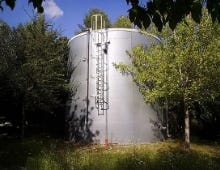
Industrial Galvanized & Stainless Steel Tanks
The Fix: These solve the NSF/ANSI 61 compliance gap. Stainless steel (304 or 316) is naturally corrosion-resistant without liners, making it the gold standard for hygienic, long-term storage in coastal or industrial zones.
Capacity: Scalable from residential sizes to municipal-scale reservoirs.
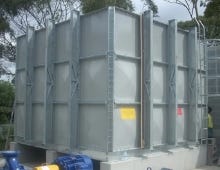
Modular Fiberglass (FRP/GRP) Tanks
The Fix: Perfect for the "Island Effect" recovery timeline. Because they are shipped as panels and assembled on-site, they can be installed in remote areas or inside existing buildings where a standard 5,000-gallon water tank wouldn't fit through the door.
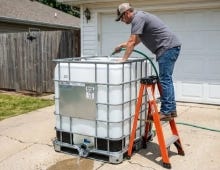
Food-Grade IBC Totes (275–330 Gallons)
The Fix: Solves the "Retrieval & Portability" challenge. Caged IBC totes are designed for forklift mobility and can be stacked, maximizing your emergency water storage per person in a warehouse environment.
NB: Interested in high-volume mobile water trailers for disaster relief? Check out this guide on best bulk mobile water trailers for disaster relief.
2. Residential & Space-Optimized Solutions
These products are engineered to fit within the "footprint" of a standard home without sacrificing volume.
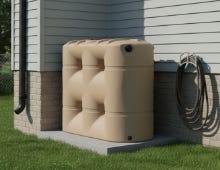
The Fix: Solves the "Accessibility" mistake. Designed with a slim profile (often 29" wide), these allow you to move a high-volume (250–500 gallon) tank through a standard interior door into a climate-controlled basement.
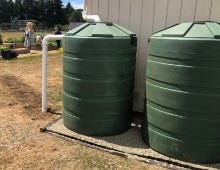
Emergency Plastic Water Tanks (Vertical/Corner)
The Fix: Uses opaque, UV-stabilized HDPE #2 to solve the "Light-Leak Algae" catalyst. Corner-fit models utilize wasted garage space while providing a stable, upright footprint.
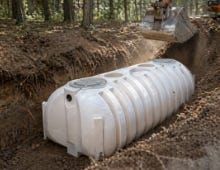
Underground Plastic Water Tanks
The Fix: The ultimate solution for "Thermal Instability" and "Space Constraints." By burying the tank, you utilize the earth’s natural insulation to prevent freezing and algae growth while keeping your surface-level square footage clear.
3. Rapid Deployment & Temporary Storage
When a crisis is imminent and you need to scale up your emergency water supply storage in hours, not days.
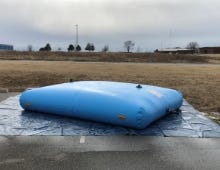
The Fix: Solves the "Storage Space" issue when not in use. These flexible tanks can be stored in a drawer, then unfolded to hold up to 25,000 gallons on a flat surface or in a truck bed.
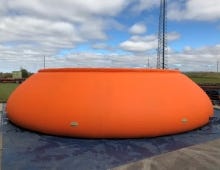
The Fix: Designed for "One-Person Setup." The foam collar rises automatically as the tank fills. Ideal for rapid relief at disaster sites or as a temporary reservoir during a water main repair.
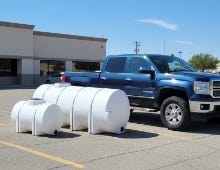
Fix: Solves the "Logistical Bottleneck." If your primary source fails, these tanks allow you to transport potable water from a functioning well or municipal fill-station to your site safely.
4. Critical Performance Accessories
As we noted in the 15 mistakes, a tank is only as good as the tools used to maintain it.
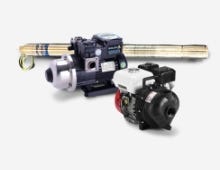
The Fix: Solves the "Extraction Tool Deficit." Manual or electric pumps ensure you can move water from a large underground or vertical tank into your home’s plumbing or portable jugs.
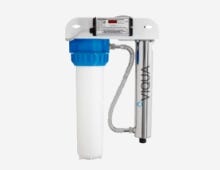
The Fix: Addresses the "Water Quality" risk. Point-of-entry filters ensure that even if the water being put into the tank is questionable, the water coming out is safe.
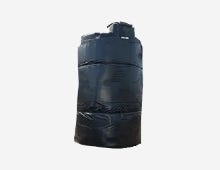
The Fix: Solves the "Thermal Expansion & Rupture" error. In extreme winters, these custom-fit blankets prevent ice formation, ensuring your emergency potable water storage remains liquid and accessible.
Selecting Your Emergency Water System: Solution Comparison Matrix
|
Tank Type |
Best Use Case |
Key Advantage |
Gallon Range |
|
Industrial/Hygienic |
Lifetime Durability (50+ yrs) |
Custom |
|
|
Residential Basement |
Fits through 30" doors |
100 – 1,057 |
|
|
Rapid Deployment |
Collapsible / Foldable |
25 – 20,000 |
|
|
Commercial/Stackable |
Forklift Portable |
275 – 330 |
|
|
Long-term/Discreet |
Freeze-proof / Space-saving |
225 – 20,000 |
Residential Emergency Water Tank Setup: The 4-Step Checklist (The "Takeaway")
Step 1: The Potable Water Audit
Don't guess your volume; engineer it. Calculate your true demand by accounting for all metabolic and auxiliary needs.
- Hydration: 1 gallon per person/day (Standard).
- Hygiene/Sanitation: 1–2 gallons per person/day.
- Pets: 1 ounce per pound of body weight/day.
- Medical/Nursing: Add 50% to the individual’s baseline.
- Food Prep: 0.125 gallons per freeze-dried meal serving.
Step 2: Foundation & Barrier Prep
The weight of water is your biggest structural hurdle. Ensure your site can handle the load.
- For Households: Never store tanks directly on concrete. Use a wooden pallet or high-density shelving to prevent chemical leaching and "cold creep" deformation.
- For Businesses: Conduct a soil-modulus check and verify warehouse slab thickness. Use the formula P=W/A to ensure you don’t exceed the floor’s bearing capacity.
Step 3: Sanitization, Treatment, & Sealing
Sanitization is a one-way street; do it right the first time to prevent biofilm colonization.
- Sanitize: Swish a solution of 1 tsp bleach per quart of water in the empty water tank.
- Dose: Use precision dosing (8 drops per gallon) of unscented 5.25% sodium hypochlorite.
- Seal: Ensure gaskets are seated and lids are tightened with a bung wrench to prevent osmotic vapor intrusion.
Step 4: The Semi-Annual Rotation Calendar
Stagnation is the enemy of quality.
- Syncing: Tie your water rotation to an existing event. For households, use Daylight Savings (every 6 months). For businesses, integrate it into the Business Continuity Plan (BCP) annual audit.
- Labeling: Physically mark the "Fill Date" and "Next Rotation Date" on the tank wall.
Securing Your Future with Professional Emergency Water Storage
In a world of increasing climatic and infrastructural volatility, emergency potable water storage is no longer a "prepper" niche—it is a cornerstone of responsible management for both businesses and families. By identifying the 15 common mistakes, from the structural risks of bearing pressure to the biological hazards of repurposed containers, you have moved from a position of vulnerability to one of engineered resilience.
Don't wait for a "Boil Water Advisory" to find the gaps in your system. Whether you are installing a modular doorway water tank for your home or a stainless steel industrial reservoir for your facility, the time to secure your most vital resource is today.
Protect your operations. Protect your family. Secure your water.


