Bulk Mobile Water Trailers: Best Tanks for Disaster Relief and Emergency Response
When a natural disaster strikes, be it a Category 5 hurricane, a seismic event, or a catastrophic water main break, the primary threat to life is the immediate infrastructure failure that follows.
As municipal grids go offline, the rapid deployment of a potable water trailer often becomes the thin line between a managed crisis and a humanitarian disaster. Traditional water systems tend to be fragile; flooding and power outages can quickly contaminate sources or silence lift stations, leaving hospitals and evacuation shelters stranded. This is why search data for emergency water trailers and disaster relief water purification systems shows a critical shift toward mobility: stationary storage simply cannot reach the "last mile" of a disaster zone.
The most effective response strategies now utilize sophisticated emergency water distribution units capable of hauling between 500 and 2,000 gallons of life-sustaining liquid. Whether utilizing a maneuverable 500 gallon potable water trailer for urban environments or a high-capacity 1000 gallon potable water tank trailer for rural hubs, these units provide the decentralized resilience required for modern disaster relief.
At Tank Depot, we believe the emergency water tank is the heart of the rig. If a unit isn't built with an NSF/ANSI 61 drinking water system component, you risk chemical leaching and bacterial growth at the exact moment a community is most vulnerable. We specialize in the high-spec potable poly tanks and NSF 61 water storage tanks that form the core of a reliable response fleet, offering the technical edge you need. From UV-stabilized materials to integrated UV water treatment for disaster relief that transforms a standard hauler into a life-saving asset.
Understanding Potability in Disaster Water Storage: More Than Just a "Clean" Tank
When specing a mobile water trailer for disaster relief, there is a dangerous misconception that any clean, new tank is safe for drinking water. In reality, the "potability" of a water tank is determined at the molecular level. For emergency management directors and NGO procurement officers, the difference between a standard utility tank and a certified potable unit is a matter of both public health and legal compliance.
Why is NSF/ANSI 61 Certification Non-Negotiable for FEMA/NGO Contracts?
If you are bidding on a government or FEMA contract, NSF/ANSI 61 drinking water system components aren't just a "nice-to-have", they are a mandatory requirement. This certification ensures that no harmful contaminants, such as lead or volatile organic compounds (VOCs), leach from the tank material into the water supply. In the chaotic environment of a disaster zone, where water may sit in a potable water trailer for days under intense heat, an uncertified tank can become a liability. Without this "Gold Standard" certification, your equipment may be rejected during inspection, delaying critical relief efforts and voiding insurance or reimbursement claims.
Material Science: Linear Polyethylene (LLDPE) vs. Cross-linked Polyethylene (XLPE)
Understanding the material science behind your potable poly tanks is essential for long-term durability. Most high-quality 500 gallon potable water trailers utilize High-Density Linear Polyethylene (HDPE/LLDPE). This material is favored for disaster relief because it is incredibly rugged, impact-resistant, and, most importantly, can be manufactured to meet strict FDA and NSF food-grade standards. While Cross-linked Polyethylene (XLPE) offers superior chemical resistance for industrial acids, it is generally not used for potable water because the cross-linking process can leave trace amounts of chemicals that don't meet NSF-61 standards. For disaster relief water, LLDPE remains the industry standard for safety and flexibility.
The Advantage of the "Black Tank" in Emergency Water Trailers
In a disaster scenario, a transportable water tank is often parked in direct sunlight for extended periods. This creates a "greenhouse effect" inside translucent white tanks, leading to rapid algae blooms that render the water undrinkable over extended periods.
The Tank Depot strategic recommendation is the "Black Tank" or "Dark Green" advantage. By using opaque, UV-stabilized materials, you block the light transmission required for photosynthesis. These algae-resistant emergency water tanks ensure that whether you are deploying a 1000 gallon potable water tank trailer in the Florida sun or the Texas heat, the water remains clear and safe for much longer than a standard translucent unit.
Tactical Disaster Water Tank Selection: Matching the Storage Unit to the Disaster Scenario
In a disaster relief operation, the environment dictates the equipment. A high-capacity trailer might be ideal for a flooded coastal plain, but it won't help a wildfire crew on a steep mountain ridge or a hospital in a dense urban center. Understanding the specific properties of different emergency water storage units ensures that your response is both rapid and sustainable.
Horizontal Leg Tanks
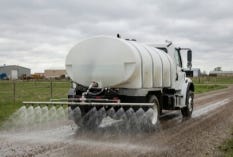
The horizontal water tank (or elliptical leg tank) is the industry standard for mobile water trailers. Their low center of gravity and integrated "legs" allow them to be bolted directly to trailer frames. For hurricanes where roads are littered with debris, a 1,000 gallon horizontal leg tank provides the stability needed for high-speed transport and off-road maneuvering. These are ideal for municipal support, often used for emergency water distribution at community centers when main lines are compromised.
Pickup Truck Tanks
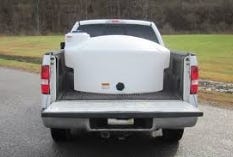
When infrastructure failure makes roads impassable for large trailers, pickup truck tanks provide the necessary agility. Designed to fit between the wheel wells of standard half-ton to one-ton trucks, these tanks (ranging from 170 to 425 gallons) allow first responders to deliver potable water to isolated residential zones. Their offset design maintains driver visibility, making them crucial for the immediate aftermath of tornadoes or earthquakes where debris makes towing a large potable water trailer impossible.
Vertical Emergency Water Tanks
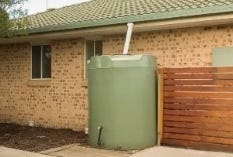
For high-volume, stationary needs such as fire water storage or sustained drought relief, vertical emergency water tanks are the most cost-effective solution. Available in capacities from 30 gallons to 500 gallons, (with larger vertical tanks reaching up to 15,500+ gallons), these tanks have a small footprint but massive storage potential. In wildfire-prone regions, these serve as "static water sources," allowing fire crews to refill quickly without returning to a distant municipal hydrant. Their height provides natural head pressure, which is vital for gravity-fed distribution in remote basecamps.
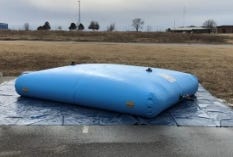
Collapsible Bladders & Onion Tanks
In extreme scenarios where transport space is at a premium, bladder water storage tanks and self-supporting onion tanks offer unparalleled logistics. These units ship flat and can be deployed in minutes. Bladder tanks are ideal for temporary hospitals, as they can be placed in crawl spaces or on flat ground to store thousands of gallons of potable water without the bulk of a rigid tank. Onion tanks (or "open-top" self-supporting tanks) are frequently used in wildfire suppression as "dip tanks" for helicopters or high-volume drafting for fire engines.
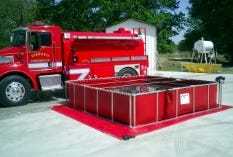
Folding Frame Tanks
Often seen in rural firefighting and industrial disaster response, folding frame tanks provide a massive, open reservoir that can be set up in seconds. These are essential for "shuttle" operations, where a potable water tanker trailer dumps its load into the frame tank and immediately returns for more, allowing the response team to have a continuous, high-volume supply of water for cooling or fire suppression.
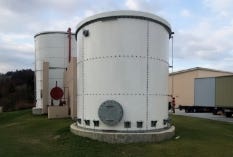
NFPA 22 Bolted Steel Tanks
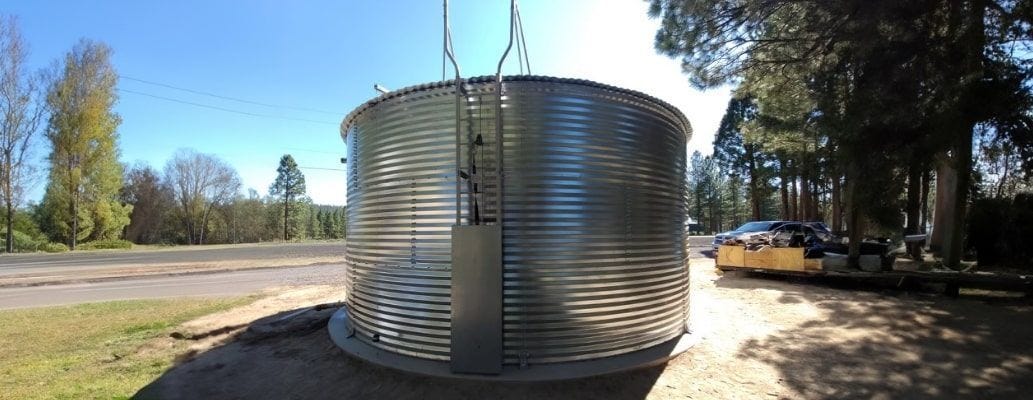
In the wake of a catastrophic event, temporary mobile units eventually need to give way to permanent infrastructure. For large-scale industrial facilities, municipal water districts, and high-occupancy hospitals, NFPA 22 Steel Tanks for fire protection are the gold standard for long-term resilience. Unlike portable poly units, these bolted steel structures offer massive capacities, ranging from 750 to over 5 million gallons.
Compliant with National Fire Protection Association (NFPA) standards, these tanks are engineered to withstand extreme environmental loads, including seismic activity and high-wind hurricane zones. During a prolonged drought or following a catastrophic wildfire, these high-volume reservoirs provide the "Deep Reserve" necessary to protect multi-million dollar assets and entire communities. By integrating a dedicated NFPA 22 fire protection tank into a facility's disaster plan, procurement officers ensure that even if the city's water mains fail, they have millions of gallons of pressurized water ready for high-volume suppression systems.
A Comparison Guide for Disaster Relief Water Tanks
| Tank Type | Primary Disaster Application | Gallon Capacity Range | Deployment Agility | Key Technical Advantage |
| Horizontal Leg Tanks | Hurricanes & Flooding | 135 – 4,035 gal | High (Trailer) | Low center of gravity; integrated mounting legs. |
| Pickup Truck Tanks | Tornadoes / "Last Mile" | 170 – 425 gal | Extreme (Truck) | Designed to fit wheel wells; maintains driver visibility. |
| Vertical Emergency Tanks | Drought & Fire Support | 30 – 15,500+ gal | Low (Stationary) | Small footprint; natural head pressure for gravity feed. |
| Bladders & Onion Tanks | Mobile Hospitals / Helo-Dip | 25 – 20,000 gal | High (Portable) | Ships flat; rapid deployment in remote terrain. |
| Folding Frame Tanks | Wildfire Shuttle Operations | 500 – 5,000+ gal | High (Instant) | Open-top for rapid engine drafting and refilling. |
| NFPA 22 Bolted Steel | Industrial Infrastructure | 750 – 5,000,000+ gal | Permanent | Seismic/Wind rated; long-term recovery resilience. |
Technical Engineering for Disaster Environments
A mobile water unit is only as reliable as its weakest component. In a disaster zone, where roads are uneven, temperatures are extreme, and power is non-existent, standard water hauling setups can fail. Engineering a high-performance potable water trailer requires a "Systems Thinking" approach that prioritizes stability, environmental resilience, and mechanical reliability. Make sure to also avoid these 15 mistakes when planning out your business' emergency water storage.
Surge Management: The Role of Internal Baffles and Surge Busters
The most dangerous moment in water transport occurs during braking or cornering. A 1,000 gallon water trailer carries over 8,000 lbs of liquid; without stabilization, that weight shifts violently, creating a "slosh" effect that can lead to vehicle jackknifing or rollovers.
At Tank Depot, we mitigate this risk through integrated surge management. By installing Surge Buster systems or internal baffles, we break up the liquid mass into smaller, manageable pockets. This significantly reduces the kinetic energy of the moving water, providing superior trailer stability during high-speed transit or emergency maneuvers in debris-strewn disaster areas.
Freeze Protection: Maintaining Flow in Sub-Zero Conditions
Disaster relief isn't always a "warm weather" event. From high-altitude mountain rescues to winter power grid failures, keeping water in a liquid state is a major engineering challenge. We utilize Powerblanket and custom-fit thermal heater blankets to provide consistent, regulated heat to the tank’s exterior.
These blankets prevent the water from reaching its freezing point even in sub-zero environments, ensuring that emergency water storage units remain functional when they are needed most. For a 500 gallon potable water trailer, these insulated blankets also protect sensitive valves and plumbing from ice-expansion damage, which is a common cause of equipment failure in "Deep Freeze" scenarios.
Pumping Systems: Choosing Off-Grid Reliability
In a true disaster, you cannot count on a standard 110V outlet. Choosing a pump is about matching the "Power Profile" of the disaster site to the required flow rate. For maximum off-grid reliability, solar and engine-driven units are preferred, but specialized electric systems are essential for stabilized environments like mobile hospitals or evacuation centers.
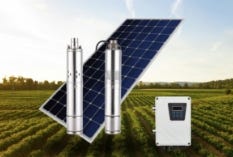
Solar-Powered Independence
For long-term drought relief or remote camps, systems like the Puremint Solar Pump Combo are game-changers. These allow for emergency water distribution without the need for fuel or external power, utilizing solar panels to provide consistent flow.
Constant Pressure for Medical & Sanitary Use
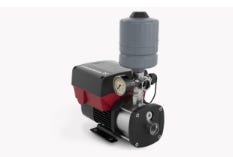
In temporary healthcare facilities, water pressure must be consistent. Units like the DAB ESYBOX Mini 3 or the Grundfos SCALA2 utilize variable speed frequency drives (VFD) to maintain constant pressure across multiple outlets, ensuring that a 500 gallon potable water trailer performs like a permanent municipal connection.

High-Volume Multistage Centrifugal Pumps
When moving water from a large 1,000 gallon horizontal leg tank to various distribution points, the Walrus TPH Multistage series offers the ruggedness required. These stainless steel centrifugal pumps are designed for continuous duty and are highly resistant to the debris often found in post-disaster environments.
Submersible "Bottom Suction" Solutions
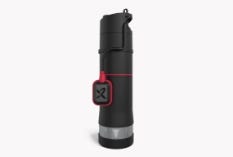
In flooding scenarios where you need to draft water from a secondary source into your potable water trailer, the Dublin Pump Company Automatic Bottom Suction Cistern Pump is ideal. It allows for nearly complete drainage of a source, maximizing every available gallon.
Logistics & Compliance in Emergency Water Management
Owning a potable water trailer for disaster response involves more than just filling a tank; it requires strict adherence to highway safety and health department standards. Failure to comply with these regulations can lead to impounded equipment at the exact moment a community needs it most.
DOT Requirements: Highway Safety for High-Volume Hauling
When hauling a 1,000 gallon potable water tank trailer, you are moving over 4 tons of liquid. This requires a DOT-compliant trailer equipped for the rigors of interstate travel and debris-heavy disaster zones.
- Braking Systems: For any unit over 3,000 lbs GVWR, electric or surge brakes are mandatory to prevent jackknifing.
- Lighting & Safety: LED lighting packages are the standard for high visibility in low-light, power-outage scenarios.
- Safety Chains & Accu-Lube Hubs: Heavy-duty safety chains and easy-maintenance hubs (like "Accu-Lube") ensure that long-distance deployments don't result in roadside breakdowns.
Sanitization Protocols: Maintaining a Potable Fleet
During "off-seasons," a potable water trailer cannot simply sit idle. To prevent biofilm buildup and maintain NSF/ANSI 61 integrity, a strict sanitization schedule is required.
- The Chlorine Flush: Use a diluted chlorine solution (approx. 50 ppm) to circulate through the tank, DAB or Grundfos pumps, and all discharge hoses.
- Rinsing: Flush with potable water until the chlorine scent is neutralized.
- Dry Storage: Whenever possible, store tanks empty with the manway slightly vented to prevent anaerobic bacteria growth, or keep them completely full with a stabilized residual of chlorine if immediate deployment is expected.
Buying vs. Building Your Disaster Water System: The Tank Depot Roadmap
One of the most frequent questions we receive is: "Should I buy a turnkey water wagon or build my own?" At Tank Depot, we provide the components for both paths.
How to Spec Your Own Trailer
Building a custom rig allows you to tailor the unit to your specific disaster profile (e.g., high-pressure fire suppression vs. low-pressure potable distribution).
- Step 1: Select the Tank. Choose an NSF 61 water storage tank with internal Surge Busters for transport stability.
- Step 2: Match the Pump. Determine if you need the constant pressure of a DAB ESYBOX or the high-volume transfer of a Walrus TPH multistage centrifugal pump.
- Step 3: Frame and Plumbing. Ensure the trailer frame is rated for the liquid weight and use potable-grade hoses and lead-free fittings.
Customization: Tailoring for the Mission
The "last few feet" of your distribution system define its utility:
- Spray Bars: Ideal for dust suppression on gravel roads or fire-line wetting.
- Fire Nozzles: Essential for wildfire suppression and hot-spot cooling.
- Potable Spigots: A "manifold" of 5 to 10 spigots allows for rapid filling of individual water jugs for civilians in an evacuation center.
Engineering Resilience for an Uncertain Future with Tank Depot
In the wake of a natural disaster, water is more than a commodity—it is a lifeline. Whether you are managing drought relief for a rural county, providing fire water storage for an industrial complex, or deploying a 500 gallon potable water trailer to an urban "last mile," the quality of your equipment dictates the success of your mission.
At Tank Depot, we provide the mission-critical components, from NSF/ANSI 61 certified tanks and Surge Buster stabilization systems to constant-pressure DAB and Grundfos pumps, that ensure your fleet is ready for the first 24 hours and the months of recovery that follow. Don't leave your community’s safety to "standard" utility equipment. Choose the engineered reliability of a dedicated disaster response partner.