


Survive Fire Season: Tank Depot’s Guide to Fire Protection Water Tanks
You never forget the smell of smoke in the wind — or the sound of helicopters circling overhead. For many, fire season is more than a headline. It’s a looming question: Will our community be next?
At Tank Depot, we understand that your home isn’t just your property — it’s your memories, your work, your family’s safety. And protecting it starts before the first spark.
Today, it's not just homes or businesses near forests — more than 60,000 U.S. communities are at risk of wildland-urban interface (WUI) fires, where having a reliable on-site water source could be the difference between a saved home and a total loss. So how can you be confident that firefighters would have the resources to protect your property if a fire occurred? How can you ensure your water-based fire protection system is reliable in an emergency? Luckily, fire protection water tanks provide an effective solution.
Looking for immediate steps to protect your home from wildfires? Skip ahead and download our comprehensive wildfire and fire preparedness checklist here.
What Are Fire Protection and Suppression Water Tanks?
If a fire happens at your home or business, firefighters must have access to enough water to put out the flames. Yet, sometimes there isn’t an adequate water supply within range of your property for them to rely on. If you live in a rural area, this could be the case, but even a municipal water supply can fall short.
This is where fire protection tanks come in. Fire protection water tanks, also known as fire suppression tanks, are large tanks that hold water dedicated to fighting a fire. They ensure firefighters have plenty of water to suppress any fire threatening your home or property. Thus, having a fire-suppression water tank in place can give you peace of mind and help prevent devastating property loss.
As wildfires increase in speed and severity, having a dependable water source on your property becomes more than a precaution — it's a necessity. Fire protection tanks provide accessible water in the event that:
- Hydrants run dry or lose pressure during high-demand events
- Power outages disable pumps and municipal supply systems
- Fast fires overtake infrastructure, leaving first responders with no immediate water source
In many wildfire-prone regions, fire suppression tanks are now being recommended or required by local authorities, fire marshals, and insurance providers — especially in rural areas or communities located in the Wildland-Urban Interface (WUI).
Who Uses Fire Protection Water Tanks?
Fire protection water tanks are in high demand since they solve the risk of running out of water, and some regions may face increased wildfire risk. At the same time, recent increases in regulations and insurance requirements make fire suppression tanks more necessary than ever. Fire protection tanks are used across many industries and locations, such as:
- Hospitality
- Power plants
- Agriculture
- Warehouses
- Manufacturers
- Hospitals
- Schools
- Residential homes
- Rural municipalities
Increasingly, these tanks are also used in Firewise USA® communities, in Community Wildfire Protection Plans (CWPPs), and by homeowners in wildfire-prone areas who need standalone water reserves when municipal systems can’t keep up with suppression demand. Whether for rural homes, agricultural land, or neighborhood-scale defense, water storage is becoming a vital layer of wildfire readiness. These communities are at increased risk of ignition from embers and fast-moving flame fronts. Fire suppression tanks provide a first-response water source that can:
- Feed roof-mounted sprinkler systems
- Support perimeter defense systems
- Serve as drafting sources for fire crews when hydrants are unavailable
These are just a few examples of who can benefit from having a fire protection tank.
Wildfire Season Is Changing — So Should Our Fire Protection Strategies
Wildfires today are not the same as they were a decade ago. Fueled by hotter temperatures, drier vegetation, and unpredictable wind patterns, they’re faster, larger, and increasingly destructive. In fact, just 3% of wildfires now cause nearly 90% of wildfire-related damage in the U.S. These are known as fast fires — blazes that can spread over six square miles a day, often outpacing emergency response efforts.
This shift has placed unprecedented strain on public water systems and fire services. In many areas, hydrants may lose pressure or become inaccessible due to power outages, blocked roads, or sheer demand during multi-structure events. When seconds count, relying solely on municipal water isn’t a plan — it’s a gamble.
That’s why communities across wildfire-prone regions are rethinking fire protection as a layered strategy, with on-site water storage tanks playing a frontline role. Whether installed on rural homes, agricultural land, or commercial facilities, these tanks provide dependable, immediate access to water — giving both residents and firefighters a vital tool in the fight against flame.
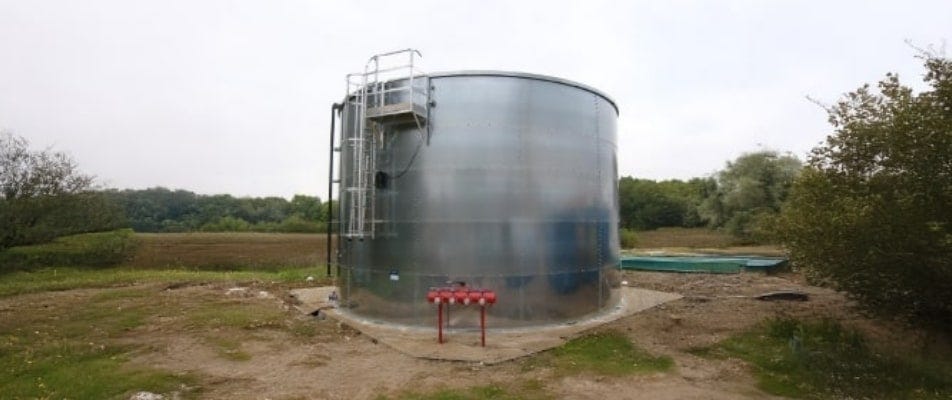
Why Fire Suppression Water Tanks Are Important
According to the National Fire Protection Association (NFPA), public water supplies can vary greatly, even in the span of a day. So for water-based fire protection systems, water storage tanks ensure there is enough water to fight fires if necessary.
When it comes to fire protection, you can't be too safe. Fires can be devastating if not controlled, often resulting in the loss of property or even life. Fire suppression water tanks give you peace of mind knowing you’d have a reliable water supply in such an emergency.
But their importance goes beyond emergencies
- In remote and semi-rural regions, fire water tanks may be the only water source available.
- In the wildland-urban interface (WUI), they act as a buffer against fast fires, allowing suppression systems to activate even if evacuation orders are in place.
- In Firewise USA® communities and CWPP (Community Wildfire Protection Plan) strategies, tanks are often cited as essential infrastructure for reducing ignition risk and improving community resilience.
A fire tank doesn’t just prepare you for a crisis — it positions you to withstand one.
Benefits of Fire Protection and Suppression Water Tanks
Besides the peace of mind of having a backup water supply, fire water tanks:
- Ensure disaster preparedness. No one ever expects their home or business to come into harm's way. But if the unexpected happens, fire protection tanks help you be prepared for the worst.
- They are highly durable. Fire protection water tanks supplied by The Tank Depot meet standards put forth by the NFPA. They are built to withstand any weather or environment.
- Work alongside other systems. Fire suppression tanks can be used as part of a multifaceted fire protection plan, such as with a sprinkler system.
- Supports defensible space strategies. Tanks can be paired with roof sprinklers or hose systems to protect the home perimeter.
- Enhances community resilience. Tanks contribute to neighborhood-scale wildfire defense and CWPP compliance.
- Improves insurance eligibility and coverage. Some providers offer incentives for homes with dedicated fire suppression systems in high-risk areas.
- Accessible even during evacuations. Suppression systems connected to tanks can continue working when no one is on site.
From residential use to commercial and agricultural properties, fire suppression tanks provide long-term value and immediate readiness in the face of increasingly extreme fire seasons.
Types of Fire Suppression Water Tanks and Their Uses
Fire suppression water tanks come in many forms. The Tank Depot supplies a variety of tanks to suit your needs.
NFPA 22 Steel Tanks
Our steel water tanks range from a 780 to 1,000,000 gallon capacity. They’re excellent for fire protection, rainwater harvesting, water treatment, and storage. The Tank Depot supplies NFPA-22 fire protection tanks, which meet the standards outlined in the National Fire Protection Association standard no. 22. These galvanized corrugated steel tanks are tough and long-lasting, built to withstand the elements. They’re ideal for fire protection systems required to have a water supply on hand to meet fire codes.
Fiberglass Water Tankss
Fiberglass water tanks provide an economical fire protection solution. They can be customized for your needs and store up to 50,000 gallons depending on the tank. They’re crafted to meet the most stringent guidelines. Fiberglass tanks are corrosion-resistant and stronger than steel. They’re easy to transport, customize or repair. Depending on your needs and industry, they can be installed above or below ground.
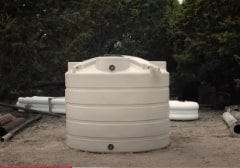
HDPE Fire Suppression Tanks
Plastic water tanks are built to withstand the test of time. They do not require maintenance and are suitable for outdoor use. They can also be UV- and algae-resistant.
Choosing the Right Tank for Fire Readiness When selecting a fire protection tank, consider:
- Local fire codes or insurance requirements
- Proximity to wildland areas or WUI zones
- Whether you need integration with sprinkler systems or pumps
- Space available and installation type (above vs. below ground)
Fire Protection Starts Before the Flames: Tank Placement & Access Tips
Investing in a fire protection tank is only part of the equation — where and how you install it matters just as much. Proper tank placement ensures firefighters and suppression systems can access water when they need it most. Here are some expert-backed best practices to follow:
- Visibility & Access
Place your fire tank in a location that’s accessible to emergency responders and within reach of fire trucks. Ensure a clear path, preferably 12 feet wide or more. - Connection Ready
Install a drafting connection or dry hydrant if applicable. These allow fire crews to quickly draw water without needing to run additional lines. - Pair With Sprinkler Systems
Tie your firefighting tank into roof, gutter, or perimeter sprinkler systems for passive fire defense. This is especially useful for remote homes where evacuation may be necessary. - Consider Gravity Flow
If possible, install water tanks at higher elevations to allow gravity-fed flow in case of pump failure. - Protect the Tank Itself
Use fire-resistant enclosures, clear nearby vegetation, and anchor tanks to withstand high winds and flying debris. Need help determining placement? Many local fire departments offer free site assessments — and Tank Depot can provide layout recommendations based on your tank type and region.
Purchase a Fire Protection Water Tank Today
As wildfires and WUI threats grow more unpredictable, the best defense is proactive infrastructure. Explore Tank Depot’s NFPA-compliant steel, fiberglass, and plastic tanks — and give your property, community, and firefighters the water advantage they’ll need when every second counts. Contact us for guidance on setting up your fire protection system.


