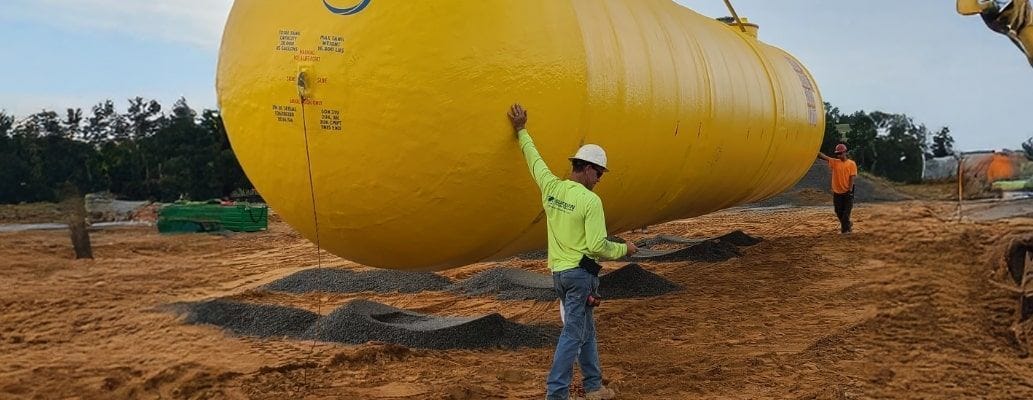
What Size Residential Septic Tank Should You Install?
As cities become more densely populated and the desire for self-sufficient living increases, many homeowners are seeking properties outside urban areas that provide a sense of independence.
Every drop of water beneath our feet is part of an invisible but vital resource—groundwater. It flows beneath us, feeding rivers, lakes, and wells, supplying over 50% of the U.S. population with drinking water.
Efficient bulk liquid transportation is critical across multiple industries, yet traditional storage solutions—such as drums and rigid tanks—present significant limitations.
As a homeowner, it’s important to know the different septic tank sizes and what each one is capable of. Choosing the wrong septic tank size can lead to overflowing toilets, backed-up drains, contaminated groundwater, and expensive repairs.
Cold weather can have a significant impact on above-ground storage tanks. As temperatures drop in winter, tank materials and components contract and harden, potentially causing damage if proper precautions are not taken.
Imagine a warehouse engulfed in flames, firefighters racing against time, only to find hydrants running dry. Recent wildfires, like California’s Palisades and Eaton fires, underscored a brutal truth: When water fails, everything burns.
A septic system is a reliable solution for wastewater management in homes without access to municipal sewer systems. But how exactly does it work, and why is it so important to maintain?
Did you know a 5000-gallon storage tank can be the perfect solution for agricultural irrigation, rainwater harvesting, or commercial and industrial applications? High capacity and with a durable construction, a 5000-gallon water tank is designed to meet a variety of needs.
Wetlands are among the most vital ecosystems on Earth, yet they are also some of the most threatened. Also known as the “kidneys of the Earth,” natural water bodies provide essential services like purifying water, storing carbon, controlling floods, and supporting biodiversity.
Wastewater treatment is a critical aspect of public health and environmental protection. In areas without access to centralized sewer systems, onsite wastewater treatment systems (OWTS) such as cesspools and septic tanks play a vital role in managing household sewage.
Winter brings drastic temperature shifts across the United States, with averages ranging from a balmy 67.4°F in Hawaii to a frigid 2.6°F in Alaska. For most states, though, winter hovers just above freezing at 33.2°F.
When you need to store a large quantity of liquid but don't have a lot of extra space, what is the best solution? Intermediate bulk containers (IBC) tote tanks are commonly used on farms and homesteads because they are an efficient way to store and transport water and other liquids.