If your property runs on a septic system, sooner or later you need a pump to move wastewater from one place to another. Pick the wrong type and you get clogs, backups, or a burned-out motor. The good news is that the choice is not complicated once you know the one thing that decides it: what the pump has to move, and how far it has to push it.
Three pumps cover almost every septic job: effluent pumps, sewage pumps, and grinder pumps. They can look alike and they all sit in a tank, but they are built for very different work. Here is how to tell them apart and match the right one to your system.
Start With What The Pump Has To Move
Every septic pump choice comes down to solids. The more solids in the liquid, and the harder they are to pass, the tougher the pump has to be. That single question sorts the three types fast.
Clear Liquid, Small Solids
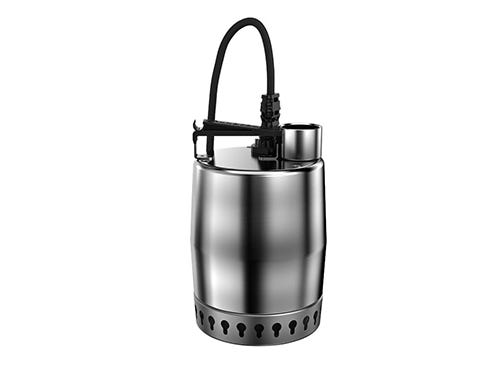
An effluent pump moves the relatively clear liquid that has already settled and separated inside a septic tank. That liquid still carries fine particles, but the large solids have dropped out. Effluent pumps are built for small solids only, generally up to about 3/4 inch [19 mm], and they push that liquid out to a drain field, a mound system, a sand filter, or a dosing chamber. How far and how high the pump has to push that liquid matters too: a mound system, sand filter, or distant field can demand more lift than a basic effluent pump provides, so check the pump's rated head against your site's elevation and distance before you buy. This is the most common and lowest-cost pump in a septic system.
Raw Waste and Bigger Solids
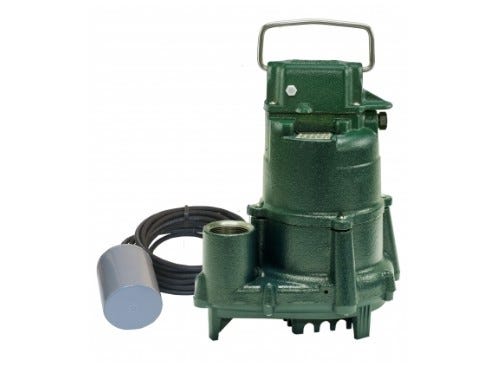
A sewage pump handles raw, unscreened wastewater that has not been through a septic tank yet, such as a basement bathroom below the sewer line or a building that has to lift waste up to a gravity sewer. Sewage pumps use a non-clog impeller and pass solids up to about 2 inches [51 mm]. They do not grind anything; they pass solids through and lift them a short distance to where gravity takes over. You will find our sewage pumps within the septic pumps range.
Grind First, then Pump Under Pressure
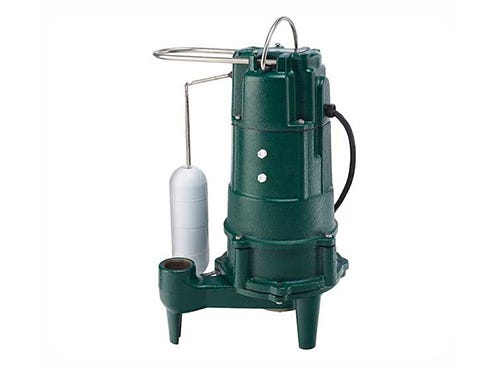
A grinder pump is the heavy hitter. Instead of passing solids, it grinds them into a fine slurry, then pumps that slurry under real pressure through a small-diameter pipe. That pressure is what lets a grinder pump push waste a long way, uphill, or into a pressurized sewer main, jobs that would stall a sewage pump. Grinder pumps cost more and use more power, so you choose one when the situation demands it: a home far below the sewer, a long run to the connection, difficult terrain, or a low-pressure sewer system. One rule matters more than any spec: a grinder pump's slurry should never discharge into a septic tank or straight to a drain field. Ground solids defeat the tank's settling process and will clog the field over time. Grinder pumps belong on pressurized sewer mains and low-pressure sewer systems, not upstream of your own septic tank.
The quick version
|
|
Effluent pump |
Sewage pump |
Grinder pump |
|
Handles |
Settled liquid, small solids (to ~3/4 in) |
Raw waste, solids to ~2 in |
Any solids, ground to a slurry |
|
Typical job |
Septic tank to drain field or mound |
Short lift of raw waste to a gravity sewer |
Long, uphill, or pressurized-main runs |
|
How it moves waste |
Passes small solids |
Passes larger solids |
Grinds, then pumps under pressure |
|
Relative cost |
Lowest |
Middle |
Highest |
|
Example (TD) |
Zoeller Mighty-Mate, Polylok effluent |
Zoeller 267, Polylok CPSE |
Zoeller M803/WDH820, Grundfos SEG |
Automatic Or Manual? A Word On Float Switches
Most septic pumps come as automatic or nonautomatic. An automatic pump has a float switch built in or attached, so it turns itself on and off as the liquid rises and falls. A nonautomatic pump needs an external float switch or a control panel to do that. For many septic and effluent tanks, an external variable-level float switch or a control panel gives you the most control over the on and off points.
Match The Pump To The Tank
A septic pump lives inside a tank, so the two have to suit each other. Our septic pump tanks and dosing basins are built to house these pumps, and an effluent filter on the outlet protects both the pump and the drain field from anything that should not pass through. Buying the pump and the tank together means they are matched before they ship.
The Short Version
Match the pump to the solids. Clear effluent from a septic tank takes an effluent pump. Raw waste over a short lift takes a sewage pump. Waste that has to travel far, climb, or enter a pressurized main takes a grinder pump. Get that right and the rest of the system follows.
Talk to a Septic Pump Expert
Not sure which septic pump fits your system? Our team sizes and matches effluent, sewage, and grinder pumps every day. Call (866) 926-5603, Monday to Friday, 7am to 7pm CST, or Contact Us online.
Related: start with the Pump Selection Guide, or if the question is where the pump sits, see submersible vs surface pumps.