

A Guide to Industrial Dust Suppression Tanks by Industry & Method
Dust suppression is no longer a secondary concern for industrial operations. According to recent industry research, the global dust control systems market was valued at $17.09 billion in 2024 and is expected to grow at a CAGR of 4.6% from 2025 to 2030, driven by intensified activity in mining, construction, agriculture, and bulk material handling.
This growth is fueled by stricter environmental regulations, rising awareness of PM10 and PM2.5-related health hazards, and the need to reduce operational risks tied to airborne dust. The construction sector alone accounted for over 20% of global demand in 2024, propelled by infrastructure expansion and tighter safety standards. Mining, long a major dust producer, is also seeing a surge in demand for advanced, automated dust suppression systems, including sensor-triggered spray rigs and brine-based haul-road treatments. Notably, wet suppression systems dominate the market, representing over 76% of total installations thanks to their cost-effectiveness, scalability, and compatibility with both water-based and chemical dust suppression agents. This has driven explosive growth in the use of:
- Dust suppression water tanks
- Bulk chemical storage tanks
- Spray rig tanks
- Skid‑mounted water tanks
- IBC totes and dosing tanks
These tanks feed modern suppression technologies including chemical palliatives, mist cannons, polymer binders, hydro‑mulching systems, and high‑pressure fogging systems. Tank Depot enables these systems by supplying:
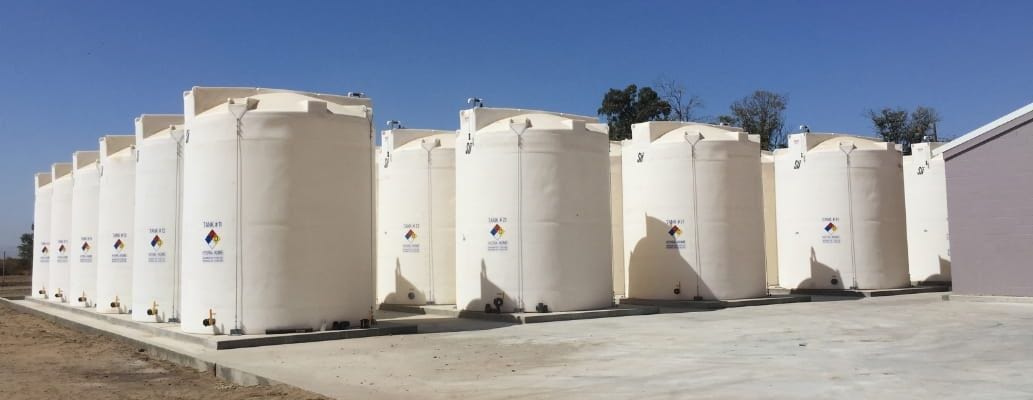
- Bulk water storage tanks for wet dust suppression
- Heavy‑duty chemical tanks for dust suppressants like calcium chloride, magnesium chloride, and brines
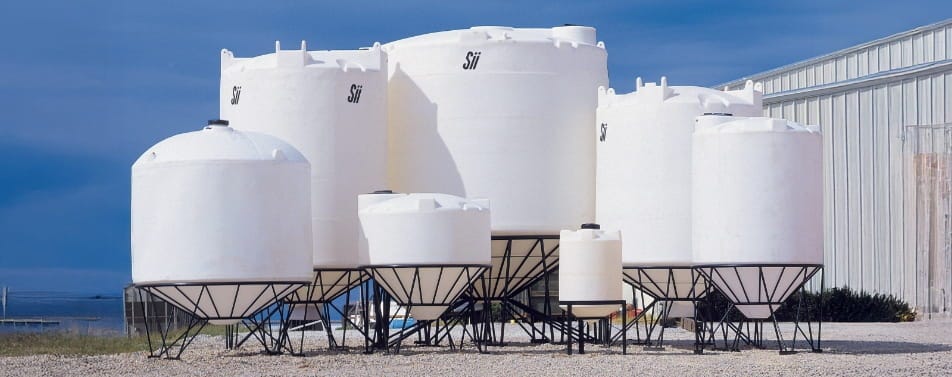
- Cone bottom tanks for lignosulfonates and polymer binders
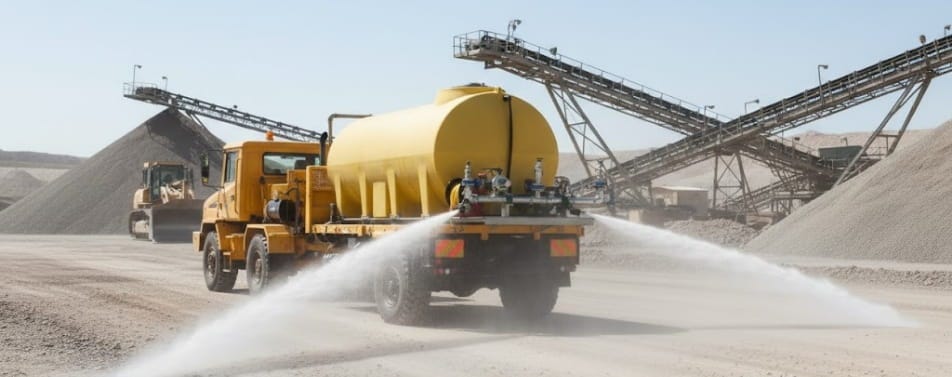
- Skid‑mounted tanks and spray rigs for mobile dust suppression
- IBC totes for surfactants and precision chemical dosing
By matching specific gravity ratings, chemical compatibility, tank geometry, and fitting materials to each dust control method, Tank Depot ensures that dust suppression systems are safe, scalable, and compliant.
The Dust Suppression Landscape in 2026
Dust suppression in 2026 is no longer just spraying water onto dirt. Today’s systems are engineered around particle size, chemical interaction, and regulatory thresholds. This has created multiple suppression categories, each with its own tank and pump requirements.
Major Dust Suppression Methods
| Method | How It Works | What It Requires |
| Wet Dust Suppression | Water binds dust particles and prevents them from becoming airborne | Bulk water storage tanks, pump-fed spray systems |
| Chemical Suppression | Salts or binders increase moisture retention and glue particles together | Chemical storage tanks, heavy‑duty poly tanks, dosing pumps |
| Polymer & Bio‑Based Binders | Forms a crust over soil and haul roads | Cone bottom tanks, mixing and agitation |
| Fog & Misting Systems | Micron‑sized droplets capture airborne dust | Water tanks, IBC totes, precision pumps |
| Hydro‑Mulching | Mulch slurry locks down exposed soil | Spray rig tanks, dual‑compartment tanks |
Each of these systems relies on proper tank selection. For example, calcium chloride brine used on mine haul roads is up to 40% heavier than water and must be stored in 1.5–1.9 SG rated industrial tanks. Lignosulfonates and polymer binders require cone bottom tanks to prevent skinning and pump blockage. Misting systems need IBC totes and small chemical tanks for surfactant dosing.
Regulations Drive Dust Suppression Tank Demand
Regulatory agencies now require documented control of:
- PM10 and PM2.5 emissions (EPA)
- Crystalline silica exposure (OSHA)
- Fugitive dust migration (AQMD Rule 403 in California and similar rules nationwide)
To comply, sites must deploy engineered dust suppression systems that can be measured, monitored, and scaled. That means:
- Permanent vertical water tanks
- Chemical storage tanks tied into automated sprayers
- Mobile dust suppression tankers
- Skid‑mounted tank and pump systems
Industry Breakdown: Dust Suppression Needs by Sector
Dust suppression challenges vary dramatically by industry, from silica exposure in urban demolition to massive haul-road emissions in open-pit mines. Each sector requires specific suppression methods and tank infrastructure, matched carefully to chemical loads, environmental conditions, and regulatory constraints.
1.Civil Construction and Demolition: The Compliance-Driven Market
In construction and demolition, dust suppression is not just good practice. It’s now a compliance requirement. Urban projects face strict enforcement from agencies like California’s South Coast Air Quality Management District (SCAQMD) under Rule 403, which mandates control of fugitive dust emissions. Equally critical is adherence to OSHA’s Respirable Crystalline Silica Standard, which sets a Permissible Exposure Limit (PEL) of 50 μg/m³ over an 8-hour TWA, requiring a written plan that identifies specific engineering controls, such as water-based dust suppression systems.
Silica dust from concrete cutting, dry sweeping, and material handling is a major hazard on active jobsites. Track-out from unpaved areas, combined with soil disturbance during excavation or grading, further increases the dust load. These risks are amplified in dense urban environments where emissions can migrate into residential areas.
Common Suppression Methods
- Water spraying using mounted sprayers or trailers to reduce airborne particulate
- Hydro-mulching, combining mulch and tackifiers to stabilize exposed soils
- Localized misting systems near demolition zones to control silica and fine dust
NB: For hydro-mulch applications or where slurry buildup is a concern, cone-bottom tanks are recommended for full drainage and easier cleanup.
Technical Considerations
Most construction dust suppression uses clean water or biodegradable additives, making HDPE tanks ideal. Where additives are used, polypropylene fittings and EPDM gaskets provide durability. For our mobile units, we provide baffle balls which are critical for vehicle stability by minimizing surge during transport.
2. Mining & Aggregates
Mining operations face intense dust generation from haul roads, crushers, stockpiles, and material transfer points. Haul roads, for instance, are among the largest sources of fugitive dust in mining operations, often accounting for the majority of emissions, and require substantial engineering controls to protect worker health and comply with air quality standards.
Moreover, dust at mine sites often contains silica, heavy metals, and toxic residues, requiring robust suppression strategies that are both scalable and compliant.
Common Dust Suppression Methods at Mining Sites
- Water with chemical palliatives such as calcium chloride, magnesium chloride, and lignosulfonates for high-traffic zones
- Dry fog systems near crushers and conveyors to reduce PM10/PM2.5 levels
- IoT-integrated suppression systems that automate treatment based on real-time air quality data
Technical Considerations
All chemical storage must account for specific gravity ratings of 1.5+, particularly with CaCl₂ brines. Use XLPE or industrial-grade HDPE tanks only. Cone-bottom tanks prevent residue buildup and improve cleanout between dosing cycles.
Fittings should be polypropylene or stainless steel, and EPDM or Viton gaskets should be selected based on chemical exposure. Tank Depot also offers high-volume standpipe pump packages to reduce refill time for haul trucks, maximizing operational uptime.
3.Agriculture & Forestry
In modern agriculture and forestry, dust is no longer considered a minor nuisance. It has direct implications for crop health, yield loss, and environmental compliance. Activities such as harvesting, tilling, and vehicle movement on dry soil release fine particulate matter that settles on leaves, reducing photosynthesis and attracting pests like spider mites, particularly in high-value crops such as almonds and walnuts.
Dust is also a known respiratory hazard for workers and a contributor to offsite air quality issues, especially in regions like California’s Central Valley. In addition, track-out from rural roads increases dust migration to paved surfaces and public areas, prompting scrutiny under state and federal regulations.
Regulatory Context
The EPA’s 2026 Multi-Sector General Permit (MSGP) introduced stricter provisions around nutrient runoff and potential PFAS contamination. This has pushed agricultural managers toward eco-friendly dust control solutions that avoid salt-based runoff and groundwater impact, especially near irrigation infrastructure.
Common Suppression Methods
- Bio-based binders such as lignosulfonates and molasses to stabilize soil with minimal environmental risk
- Calcium chloride applied to rural roads and staging areas for moisture retention
- Localized spraying using mobile units along orchard rows and field perimeters
Technical Considerations
- Use SG-rated tanks (1.5 or higher) for calcium chloride to prevent structural deformation.
- For corrosive or organic materials, select polypropylene or stainless steel fittings with EPDM or Viton gaskets for chemical resistance and long-term reliability.
4.Industrial Material Handling & Recycling
Industrial material handling operations, including cement plants, coal yards, feedlots, scrap metal processors, and aggregate facilities, face constant exposure to airborne dust during material transfer, stockpile management, and conveyor loading. In scrap recycling environments, this challenge is intensified by high-velocity particulate release from shredders and crushers, often containing hazardous substances like heavy metals, microplastics, or PFAS residues. These airborne particles pose serious risks to worker health, regulatory compliance, and equipment longevity.
Common Suppression Methods
- Dry fog systems: Used in high-precision environments such as grain elevators and coal yards. Ultra-fine droplets (1–10 microns) bind airborne dust without adding excess moisture.
- Surfactant-based misting: Applied at conveyor transfer points and screens to enhance dust particle binding and reduce surface tension.
- Polymer binders: Applied to outdoor stockpiles and haul surfaces to form a crust, preventing dust from becoming airborne.
Specs & Compatibility
- Chemical resistance is critical when working with surfactants, binders, or degreasers, cross-linked polyethylene (XLPE) or industrial-grade HDPE is recommended.
- Specific Gravity ratings: Use tanks rated 1.5 SG or higher for polymer suppressants or any dense additives.
- Fittings: Stainless steel or polypropylene are essential to prevent chemical corrosion.
- Gaskets: Viton is preferred for surfactants and polymers; EPDM may suffice for simpler applications.
Recommended Dust Suppression Tanks by Industry
|
Industry |
Tank Depot Product | Best For |
|
Civil Construction & Demolition |
Static water supply at staging areas |
|
|
Flexible placement and rapid deployment |
||
|
Mobile suppression on shifting job sites |
||
|
Perimeter dust control with pumps |
||
|
Compact sites with limited access |
||
| Mining & Aggregates | Vertical Storage Tanks (10,000–20,000 Gal) | Hydration hubs for mining haul roads |
| Heavy-Duty Horizontal Tanks | Storage of dense chemical brines | |
| Cone-Bottom Chemical Tanks | High-viscosity suppressants like lignosulfonates | |
| Skid-Mounted Tanks | Mobile suppression around site perimeter | |
| Agriculture & Forestry | Cone-Bottom Tanks | Eco-friendly suppressants requiring full drainage |
| Nurse Tanks | Localized coverage in large acreage agricultural operations | |
| Leg Tanks | Localized coverage in large acreage agricultural operations | |
| Chemical Induction Systems | On-site mixing of additives and surfactants | |
| Industrial Material Handling & Recycling | IBC Totes / Dosing Tanks | Surfactant dosing in misting/fogging systems |
| Cone-Bottom Tanks | Polymer binder storage with full drain capability | |
| Skid-Mounted Spray Tanks | Deployment across industrial/recycling layouts | |
| Vertical Storage Tanks | Clean water supply for fogging/sprinkler systems |
Product–Suppressant Alignment Matrix
Modern dust suppression systems depend on precise alignment between chemical type, specific gravity, and tank construction. Selecting the wrong dust suppression tank can result in tank deformation, pump failure, clogged lines, or regulatory exposure. Tank Depot eliminates that risk by matching each dust control method with the correct bulk water tank, chemical storage tank, or spray rig tank.
| Suppression Method | Common Chemicals | Tank Depot Product |
SG | Rating Material & Fitting Requirements |
| Wet suppression | Water, recycled water | Vertical water tanks, mobile water trailers | 1.0 | HDPE tanks, standard fittings |
| Hygroscopic salts | Calcium chloride (CaCl₂), Magnesium chloride (MgCl₂) | Heavy‑duty industrial chemical tanks | 1.5–1.9 | XLPE or HDPE, stainless steel or polypropylene fittings |
| Polymer binders | Acrylic polymers, vinyl acetate | Cone‑bottom chemical tanks | 1.5+ | Full‑drain design, agitation capability |
| Bio‑based binders | Lignosulfonates, molasses | Cone‑bottom tanks or inductor tanks | 1.5+ | Mixer‑compatible, drainable tanks |
| Surfactant fogging | Water + soaps | IBC totes, dosing tanks | 1.0 | Precision valves, sealed lids |
This matrix allows Tank Depot customers to deploy dust suppression tank systems that are not only effective, but structurally safe and chemically compatible.
Critical Tank Selection Considerations
Dust suppression chemicals are far more demanding than water. Selecting the wrong water tank or chemical storage tank can lead to tank bulging, cracking, pump cavitation, and chemical crystallization. The three most important design variables are specific gravity, drainage, and fitting compatibility.
Specific Gravity (SG) Ratings
Water has a specific gravity of 1.0.
Calcium chloride brine can reach 1.4–1.5.
Polymer and lignosulfonate solutions are often even heavier.
Using a standard water tank for chemical dust suppressants can cause:
- Tank wall deformation
- Base failure
- Structural cracking
- Catastrophic leaks
That is why Tank Depot specifies 1.5 SG to 1.9 SG industrial tanks for:
- Calcium chloride
- Magnesium chloride
- Polymer binders
- Bio‑based suppressants
Drainage Efficiency
Many modern dust suppressants behave like liquid glue. Polymers and lignosulfonates will:
- Settle
- Skin over
- Harden inside flat‑bottom tanks
Flat‑bottom tanks trap residue, clog pumps, and waste chemicals.
Cone‑bottom tanks solve this by:
- Allowing 100% drainage
- Preventing buildup
- Making wash‑out and changeovers easy
- Extending pump and hose life
For any polymer‑based or organic dust suppressant, cone‑bottom tanks are mandatory.
Fitting & Gasket Compatibility
While polyethylene tanks resist most chemicals, fittings often fail first.
Calcium chloride aggressively corrodes:
- Brass
- Galvanized steel
- Low‑grade steel
Tank Depot recommends:
- Polypropylene fittings or stainless steel fittings
- EPDM gaskets for salt brines
- Viton gaskets for polymers and organics
This prevents:
- Chemical leaks
- Crystallization at joints
- Costly system shutdowns
Case Studies
Newmont Mining – Nevada
Newmont’s haul‑road dust suppression program uses lignosulfonate binders applied through sensor‑triggered spray systems. These are supplied from XLPE cone‑bottom tanks rated for high‑SG liquids, ensuring reliable flow and no residue buildup between campaigns.
Texas Recycling Facility
A large metal shredding operation installed misting bars at shredder intakes and conveyor discharge points. These systems are fed by IBC totes and dosing tanks storing surfactant solutions, enabling real‑time control of high‑velocity metal dust.
Central Valley Orchards
California nut growers apply calcium chloride brine to orchard roads and track‑out zones using nurse tanks and tractor‑mounted sprayers. Tank Depot‑style 1.5+ SG chemical tanks prevent structural failure under heavy brine loads while delivering consistent dust control.
Tank Depot’s Role in Scalable, Safe Dust Suppression
Effective dust suppression in 2026 is no longer about simply "wetting the ground". It is about engineering precision. As regulatory bodies like the EPA, OSHA, and MSHA implement stricter opacity limits and lower Permissible Exposure Limits (PEL), the equipment you choose becomes your primary line of defense.
At Tank Depot, we specialize in the high-performance hardware required to bridge the gap between active operations and environmental compliance. Whether it is a 10,000-gallon vertical hydration hub for a mining site, a baffled leg tank for urban construction, or XLPE dosing tanks for precision dry fog systems, our products are engineered for the specific gravity and chemical compatibility demands of modern suppressants.
By integrating smart staging, durable storage, and precision pumping, facilities can not only meet their Title V permit requirements but also protect their most valuable assets: their equipment and their people.
Is your facility ready for the next compliance audit?


