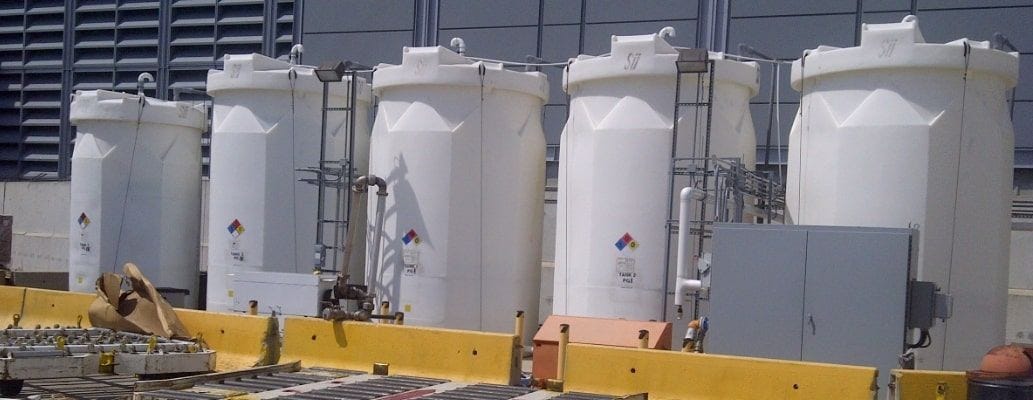
Liquid Fertilizer Storage Tanks 101: Preventing Corrosion, Leaks, and Structural Failure
The landscape of modern precision agriculture has shifted decisively toward liquid bulk nutrients, with Urea Ammonium Nitrate (UAN 28 and UAN 32) leading the charge for high-efficiency row crop management. While these liquid formulations deliver incredibly uniform nutrient distribution, they introduce hidden operational threats that can turn standard storage vessels into catastrophic environmental and financial liabilities. That’s where certified liquid fertilizer storage tanks come into play.
Concentrated liquid fertilizers pose extreme hydro-structural challenges; for instance, UAN 32 solution has a density roughly 30% higher than water, forcing an immense structural weight load of 11.1 lbs/gallon down upon tank floors and plumbing joints. Without temperature regulation, dropping seasonal conditions can trigger "salt-out" crystallization, while unalloyed nitrogen ions aggressively corrode untreated containment infrastructure.
To protect your valuable nitrogen yield and eliminate structural cracks before they start, implementing optimized, heavy-duty liquid fertilizer storage tanks is a critical operational imperative. Leading American manufacturers like Snyder Industries and Norwesco explicitly engineer high-density linear polyethylene (HDLPE) storage solutions rated at 1.5 SG to 1.9 SG (Specific Gravity) to safely withstand heavy chemical loads up to 15.8 lbs/gallon. Investing in engineered poly or stainless steel systems from proven brands like Chemtainer and Polylok ensures complete chemical compatibility, eliminates rust-induced leak paths, and seamlessly satisfies strict state environmental secondary containment regulations.
Understanding the Specific Gravity (SG) Multiplier in Fertilizer Storage
When you look at a storage tank filled with fluid, it is easy to assume that all liquids behave like water. In the world of agricultural chemicals, that assumption is an incredibly dangerous mistake. The structural physics of liquid mass dictates that liquid fertilizers are vastly different from water due to their high density. For example, a standard Urea Ammonium Nitrate (UAN 32) solution exerts an average density of 1.28 to 1.32 kg/L , making it roughly 30% heavier than water.
To put this into a simple mathematical breakdown, standard water weighs 8.34 lbs per gallon. High-concentration UAN 32, however, forces a massive structural weight load of 11.1 lbs per gallon straight down upon the structural floors, sidewalls, and joints of your chemical tank. If you put a 11.1-lb liquid into a tank designed only for 8.34-lb water, the physical stress will cause the structural integrity of the vessel to fail prematurely. This structural reality makes it absolutely critical to verify your fertilizer tank's heavy-duty specific gravity (SG) rating before making a purchase.
Polyethylene Mastery: HDPE vs. XLPE
High-Density Linear Polyethylene (HDPE) serves as a rugged, completely rust-proof baseline for most farm and agricultural retail setups. Polyethylene will not react with your fertilizer, which gives it a huge advantage over untreated metals. However, standard poly water tanks fail quickly because their walls are too thin. For safe fertilizer handling, manufacturers enforce a non-negotiable mandate: you must use a heavy-weight chemical storage tank with a wall thickness rated between 1.5 SG and 1.9 SG.
Standard Water Tank (1.0 SG) --> [ Exclusively for Liquids up to 8.34 lbs/gal ]
Heavy-Duty Poly Tank (1.5 SG) --> [ Rated for Materials up to 12.0 lbs/gal — Safe for UAN ]
Extreme Chemical Tank (1.9 SG)--> [ Rated for Materials up to 15.7 lbs/gal — Max Structural Buffer ]
While HDPE handles straight nitrogen solutions beautifully, you need to step up to Cross-Linked Polyethylene (XLPE) for more complex operations. If your farm manages advanced tank mixes, complex surfactant packages, or aggressive herbicide combinations, the chemical links in XLPE provide superior resistance against structural environmental stress cracking.
The Stainless Steel Distinction: 304 vs. 316 Grade
When analyzing poly vs stainless steel fertilizer tanks across a decades-long operational lifespan, steel initially looks like the strongest option on the market. However, suitability depends entirely on the specific grade of stainless steel used during construction. Traditional 304-grade stainless steel contains a higher percentage of carbon and is less expensive , but it suffers from a major limitation: it is structurally vulnerable to targeted chemical degradation from acidic crop micronutrients or complex sulfur blends.
This is why 316-grade stainless steel is the true industry benchmark for bulk storage. Molybdenum enrichment alters the chemical matrix of 316 steel, allowing it to shrug off aggressive chloride, nitrate, and heavy zinc-sulfate chemical mixtures seamlessly.
⚠️ FITTINGS ALERT: A common, costly mistake is installing a premium chemical tank but using cheap plumbing. Matching your pumps, valves, and plumbing to 316-grade hardware or heavy polypropylene connections is mandatory to avoid rapid rust and localized galvanic reactions along your tank joints.
The Specialty Polymer Tier: PP, PVDF, & PVC
For highly specialized industrial environments, three other distinct polymers offer targeted chemical protection:
- Polypropylene (PP): This material is engineered specifically for excellent chemical resistance paired with high-temperature performance up to 180°F, making it ideal for blending facilities where mixing chemicals creates heat.
- Polyvinylidene Fluoride (PVDF): Regarded as the ultimate high-purity polymer, PVDF offers unmatched premium resistance against aggressive chemical solutions and punishing oxidizing agents without ever leaching or degrading.
- Polyvinyl Chloride (PVC): A highly cost-effective, common plastic that provides reliable, targeted material compatibility profiles for distinct chemical transfer and water-handling setups.
The Carbon Steel Risk Mitigation Protocol
If you choose to use standard carbon steel (mild steel) tanks, you face a direct, aggressive chemical threat. Unalloyed ammonium and nitrate ions naturally react with bare steel, triggering rapid surface pitting, severe crevice corrosion, and dangerous stress cracking right along the tank's welded seams.
To legally and safely use carbon steel for liquid fertilizer, you must follow strict code requirements. There is an absolute mandate to install a type-approved, fluid-tight internal barrier lining, such as a monolithic epoxy resin or a specialized phenolic internal coating, to keep the chemical solution from touching bare metal.
Additionally, because liquid fertilizers separate and drop crystals when they sit in cold weather, regular internal mechanical agitation is an absolute necessity. Without agitation systems, stagnant sediment builds up along the bottom perimeter, accelerating localized rust and causing the tank to weep or fail.
Quick Material Guide for Fertilizer Storage Tanks
Use this easy-to-follow guide to instantly compare your bulk liquid fertilizer options:
|
Material Class |
Minimum Rating Required |
Target Lifespan |
Secondary Containment Mandate |
Best Suited For |
|
Heavy-Duty HDPE |
1.5 to 1.9 SG Rating |
10–15 Years |
External Dike/Bund Required |
Standard UAN 28 & UAN 32 on the farm |
|
Cross-Linked Poly (XLPE) |
1.9 SG Rating |
15–20 Years |
External Dike/Bund Required |
Fertilizer mixed with surfactants/herbicides |
|
316L Stainless Steel |
Engineered Thick Wall |
30+ Years |
Double-Wall or Approved Pad |
Aggressive micronutrients, sulfur, & long-term bulk |
|
Coated Carbon Steel |
Epoxy/Phenolic Lined |
Variable |
Mandatory Continuous Monitoring |
Large-scale retail storage with active agitation |
How to Prevent Fertilizer Tank Corrosion and Salt-Out
The Science of Cold-Weather "Salt-Out" Crystallization
Managing stagnant agricultural inventory requires a clear understanding of physical phase changes, particularly when seasonal temperatures drop across the U.S. Central time zone. One of the most common challenges in bulk storage is a phenomenon known as "salt-out".
Salt-out occurs when dissolved fertilizer salts drop out of chemical suspension and crystallize at low temperatures. Because a high-concentration UAN 32 storage tank carries a higher nitrogen density and lower water content, it features a much higher crystallization risk than lower-grade solutions.
The precise temperature threshold for a standard UAN 32 storage tank setup is 28°F (-2°C). Once outdoor temperatures drop to this limit, the solution begins to form dense, glass-like urea and ammonium nitrate crystals near freezing. By contrast, a lower-concentration UAN 28 solution can tolerate much colder drops down to -1°F (-18°C) before physical crystallization occurs.
When salt-out occurs, these dense crystalline sediments do not remain floating; instead, they sink and accumulate in heavy layers along the perimeter floors and walls of the tank. This creates a double operational crisis:
- Valve Choking: The dropping solids block standard 3-inch discharge plumbing and pump lines, leading to difficult tank cleanouts and spray nozzle plugging during peak application seasons.
- Under-Deposit Corrosion: The packed, stagnant chemical sediment traps moisture and oxygen directly against the tank shell. This accelerates aggressive, localized under-deposit pitting along internal floor welds and base joints.
Deploying High-Efficiency Agitation Engineering
The most effective way to eliminate under-deposit pitting and maintain stable nitrogen performance is by learning how to prevent fertilizer tank corrosion through consistent fluid movement. Many modern industrial fertilizer terminals and farm operations achieve this by installing dedicated tank recirculation systems.
Instead of letting the liquid sit static all winter, you can integrate heavy-duty chemical recirculation pumps combined with internal hydro-delivery eductor nozzles attached directly to the tank plumbing. Eductor nozzles utilize the venturi effect, injecting high-pressure fluid through a specialized taper to draw in surrounding liquid. By relying on specialized 4:1 or 5:1 fluid mixing ratios, a pump pushing 50 gallons per minute (GPM) through the nozzle generates a massive, sweeping floor velocity of 200 to 250 GPM inside the tank. This intense fluid action continuously resuspends sediment, prevents crystal buildup along the perimeter edges, and dramatically reduces localized chemical degradation.
Elastomer Seal Optimization Framework
While choosing the right liquid fertilizer storage tanks and material layout is critical, you must not overlook the smallest components: the gaskets and plumbing seals. Elastomer seals are the primary point of catastrophic system leakage because aggressive chemical formulations can rapidly degrade incompatible rubber compounds, causing them to blister, crack, or lose compression.
To keep your product flowing safely instead of leaking, select your gasket elastomer based on the specific pH and chemical profile of the stored nutrient mix:
- Viton (FKM) Elastomers: Viton generally works exceptionally well with low-pH (highly acidic) solutions. This makes it the non-negotiable choice for handling concentrated micronutrients (like zinc, copper, or iron formulations) and complex agricultural chemical additives that would eat through standard seals.
- EPDM Seals: EPDM generally works exceptionally well with high-pH (caustic or alkaline) products. It offers premium ozone resistance, excellent weathering durability, and a highly effective containment barrier for standard, high-pH liquid commercial nitrogen solutions and bulk crop fertilizers.
Navigating Bulk Liquid Fertilizer Storage Regulations
The Legal Realities of Agricultural Chemical Storage Compliance
Operating high-capacity agricultural storage without understanding regional environmental law is an incredibly costly gamble. When a primary valve fails or a wall ruptures, the resulting chemical spill does not just mean lost inventory—it triggers severe environmental liabilities, devastating EPA clean-up fines, and aggressive state enforcement actions. Because liquid fertilizers are highly soluble and toxic to aquatic ecosystems, accidental releases easily compromise groundwater, municipal wells, and adjacent tile inlets.
Regulating agencies dictate that it is the property owner's absolute duty of care to maintain safe, code-compliant infrastructure at all times. In short, constructing proper containment is a fundamental business protection mechanism that easily pays for itself by preventing expensive remediation disasters.
Deciphering Regional State Dike and Permitting Triggers
State departments of agriculture enforce vastly different technical baselines for secondary containment and facility permitting. If your operational storage volume crosses these specific regional thresholds, compliance becomes a strict legal mandate:
- Michigan (MDARD Regulation 642): Environmental rules kick in for any container holding liquid fertilizer on a farm for over 30 days. Compliance is triggered if a single operational tank exceeds 2,500 gallons, or if the facility’s combined aggregate capacity hits 7,500 gallons. Your secondary containment dikes must be engineered to hold 110% of the largest internal tank's volume plus an extra 6-inch allowance for heavy rainfall. Furthermore, all transfer operations must occur on an impermeable loading pad with a minimum capacity of 1,500 gallons.
- Minnesota (Department of Agriculture - MDA): Minnesota allows unpermitted storage for private use up to 6,000 gallons. However, as soon as on-farm qUANtities cross 6,000 gallons, you are legally required to submit comprehensive engineering drawings and an official MDA bulk storage permit application at least 30 days prior to construction. To survive extreme northern snow and precipitation loads, the secondary diked containment area capacity must hold 125% of the largest vessel's volume, plus the explicit physical fluid displacement of all other interior units placed inside the dike. The MDA strongly discourages earthen clay liners due to historical field failures, prioritizing sealed concrete, metal, or synthetic linings instead.
- Kansas Fertilizer Regulations: This state imposes a much lower compliance ceiling to protect local water tables. Comprehensive bulk liquid fertilizer storage regulations dictate that secondary containment is mandatory as soon as your liquid fertilizer storage containers reach a total capacity of 2,000 gallons in a single area. Additionally, a dedicated load pad is required once the total volume of liquid fertilizer transferred through the facility reaches 125 tons.
- Ohio & Nebraska (Title 198): Nebraska's Title 198 rules enforce strict containment mandates if a single fertilizer container exceeds 2,000 gallons or if two or more containers exceed 3,000 gallons. Both states enforce clear structural frameworks for loadout facilities. Operations must construct fluid-tight, impermeable load pads featuring a minimum 3-inch curbed design capable of safely handling the absolute weight of heavy nurse trucks and transport equipment.
Double-Wall Engineering vs. Site-Built Dikes
When designing a code-compliant facility, asset managers typically navigate a direct choice: investing in a pre-engineered double-wall poly chemical system or constructing a traditional site-built concrete containment berm.
For operations under 10,000 gallons, premium double-wall poly systems offer an exceptional cost-benefit profile. These units consist of two independent, nested walls with a monitoring space between them. If the inner product wall experiences a micro-crack, the integrated leak detection system triggers an alert before fertilizer can escape into the environment. This design completely eliminates the need for a sprawling external concrete dike, saving valuable yard space and eliminating the constant chore of pumping out rainwater.
However, for massive commercial retail setups or farm hubs handling multiple semi-tanker loads, site-built concrete containment dikes are the standard choice. While concrete dikes demand high initial labor, heavy excavation, and specialized professional engineer certifications, they allow you to cluster multiple large, flat-bottom single-wall tanks inside a single, unified barrier system. The concrete floor must be poured using fluid-tight, reinforced concrete and treated with chemical-resistant coatings to prevent common liquid fertilizers from eating into the aggregate over time.
Transform Your Liquid Fertilizer Storage Journey with Tank Depot
Securing your bulk liquid nutrient investments requires a careful balance of structural physics, material engineering, and strict regulatory compliance. As modern precision agriculture scales its reliance on high-density solutions like UAN 32 and aggressive micronutrient packages, choosing a standard water tank or an unlined metal container is no longer just a minor mistake—it is a direct path to premature asset cracking, regulatory fines, and catastrophic leaks.
At Tank Depot, we bridge the gap between high-stakes industrial demands and cost-effective farm-scale infrastructure. By partnering with leading manufacturers like Snyder Industries, Norwesco, and Chemtainer, we offer high-density linear polyethylene (HDPE) and cross-linked polyethylene (XLPE) storage solutions specifically engineered to support extreme 1.5 SG to 1.9 SG weight loads.
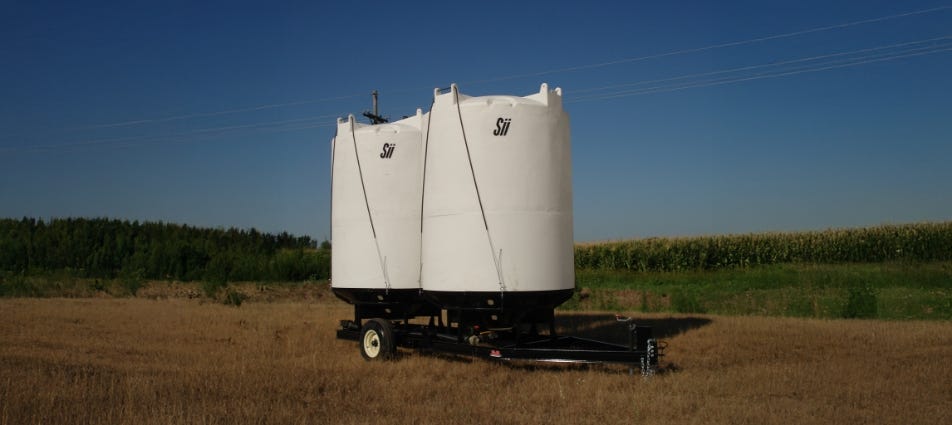
Whether your operation calls for specialized 316-grade stainless steel vertical tanks for multi-season bulk storage or lightweight poly nurse systems for active field transportation, our technical product specialists ensure your plumbing configurations match the precise chemical compatibility profiles of your chemical blends. Protect your high-yield nitrogen investments, satisfy state agricultural environmental inspectors, and bring long-term structural reliability to your containment yard by contacting Tank Depot today.