


The Vital Distinction in Bulk Water Storage
Every cistern holds water. Not every cistern holds water you can drink. That one difference determines the resin the tank is molded from, the certifications stamped on its shell, the fittings threaded into its walls, and the codes that govern its installation. Getting it wrong is not a performance problem. It is a health problem.
Potable cisterns store water that is safe for drinking, cooking, food preparation, and oral hygiene. Non-potable tanks handle everything else: irrigation, fire suppression, graywater, industrial process liquids, and job site supply moved in portable water hauling tanks. Households that want a compact backup supply for outages often start with emergency potable water tanks before scaling up to a buried cistern.
What makes a cistern potable? A potable cistern is molded from 100 percent virgin, food-grade polyethylene, certified to NSF/ANSI 61, and sealed against light, insects, and contamination. It safely stores water intended for drinking, cooking, food preparation, and daily hygiene.
Storing drinking water in a non-potable vessel exposes your household to two hazards at once. The first is chemical: uncertified plastics can release toxins into the water. The second is biological: porous, light-permeable tank walls give bacteria and algae a place to grow. Boiling the water afterward fixes neither one.
Material Science: Virgin Resin vs. Regrind and Recycled Plastics
Why Virgin HDPE Is the Standard for Drinking Water
Potable cisterns are molded from 100 percent virgin high-density polyethylene (HDPE) or linear low-density polyethylene (LLDPE). Virgin resin is a clean, traceable raw material with a known chemistry. That purity matters. It keeps volatile organic compounds and plasticizers locked in the tank wall instead of drifting into your drinking water over years of contact.
Manufacturers choose between linear polyethylene and cross-linked polyethylene (XLPE) based on the duty. Linear resins are the workhorse for water. They are food-contact compliant and fully weldable for fittings. XLPE trades some weldability for higher chemical resistance. That is why XLPE shows up in industrial chemical tanks more often than in drinking water cisterns.
The Hidden Risks Inside Regrind and Recycled Resins
Regrind resin is plastic reclaimed from earlier products and molding scrap. Nobody can fully certify what those source materials once held. Recycled feedstocks can carry residues of industrial chemicals, heavy metals, or pesticides straight into a new tank wall. Regrind also molds with microscopic voids. Those tiny pockets shelter biofilm and bacteria where no brush or chlorine rinse can reach. This is why regrind tanks are sold for stormwater, irrigation, and utility duty, never for drinking water.
Structural Differences for Underground Service
Buried tanks also carry a load that above-ground tanks never see. Underground cisterns use deep ribbing, molded support columns, and engineered wall profiles to resist soil pressure and crush loads. An above-ground utility tank dropped into a hole will not survive backfilling. The engineering matters as much as the resin.
Regulatory Compliance and Certifications Explained
NSF/ANSI/CAN 61: The Benchmark for Drinking Water Contact
NSF/ANSI 61is the American National Standard for any product that touches drinking water. It sets minimum health-effects requirements for the whole system. Certification labs soak finished components in test water at varying temperatures and pH levels. Then they measure what leaches out, including heavy metals, phthalates, and residual monomers, against strict toxicological limits. The full scope of the standard is published by NSF, the certifying body behind the mark molded into compliant tanks.
What is NSF/ANSI 61? NSF/ANSI 61 is the national health-effects standard for drinking water system components. It requires laboratory extraction testing of the finished product, tank, fittings, gaskets, and welds, to confirm that no harmful chemicals migrate into stored drinking water.
NSF/ANSI 372: Lead Limits for Fittings and Plumbing
Certification does not stop at the tank shell. NSF/ANSI 372 caps the weighted average lead content of wetted plumbing parts at 0.25 percent. Every valve, bulkhead, and coupling on a potable system should carry this low-lead mark alongside NSF 61.
FDA 21 CFR 177.1520: Food-Grade Resin Compliance
Upstream of the finished tank, the raw polymer itself must satisfy FDA regulation 21 CFR 177.1520. That rule governs olefin polymers approved for direct contact with food and consumable liquids. FDA compliance covers the resin. NSF 61 covers the finished, assembled product. A true potable cistern satisfies both.
Local Building and Health Codes
Plumbing codes built on the Uniform Plumbing Code (UPC) and International Plumbing Code (IPC) add the field rules. They require backflow prevention, air gaps, and labeling that keeps potable and non-potable lines visually separate. Federal drinking water policy under the Safe Drinking Water Act is run by the EPA, and private storage systems fall to the owner to keep safe. Your county health department has the final word on permits.
Biological, UV, and Environmental Protection Factors
Stopping Algae Before It Starts
Algae needs light. Give stored water a few weeks of sunlight through a translucent wall and photosynthesis turns a clean tank green. That is why above-ground potable tanks are molded in opaque, UV-stabilized dark green or black resin. Burial is the ultimate light block. An underground cistern sits in constant darkness at a stable ground temperature. Those two conditions suppress algae and bacterial blooms without any added chemicals.
Venting, Screening, and Sealing
A potable tank must breathe as water levels change, but the vent cannot become a doorway. Screened, downward-facing air vents keep out mosquitoes, rodents, and airborne spores. Manway lids seal against gaskets, and gasket material matters. EPDM and food-grade silicone are the potable-safe picks. General-purpose nitrile belongs on fuel and oil service. For a wider look at how tank designs handle these tradeoffs, see our guide to the types of water storage tanks.
The stakes are real. The CDC notes that private water systems are not regulated or monitored by officials. The owner alone is responsible for keeping stored water safe from germs and chemicals.
Master Technical Comparison: Potable vs. Non-Potable Cisterns
The table below condenses every engineering and health parameter that separates the two tank classes. If a tank cannot check every box in the potable column, it stores utility water, full stop.
|
Feature / Standard |
Potable Water Cisterns |
Non-Potable Water Tanks |
|
Intended Application |
Drinking water, cooking, food prep, bathing, emergency backup |
Rainwater harvesting, irrigation, fire protection, livestock |
|
Plastic Resin Quality |
100 percent virgin HDPE or LLDPE |
Recycled poly, regrind resins, non-food-grade polymers |
|
NSF/ANSI 61 |
Mandatory; certified against harmful chemical leaching |
Not required; may leach phthalates, BPA, or heavy metals |
|
FDA 21 CFR 177.1520 |
Mandatory; compliant for consumable liquid contact |
Non-compliant or unregulated |
|
Algae and UV Protection |
Fully opaque (black, dark green, or underground) |
Often translucent natural white or untreated poly |
|
Plumbing and Fittings |
NSF 61-rated stainless, lead-free brass (NSF 372), or virgin poly |
Standard PVC, industrial polypropylene, non-certified valves |
|
Cross-Connection Controls |
Dual-check backflow preventers and air gaps required |
Basic overflow and gravity drain ports |
|
Internal Sanitization |
Pre-commissioning chlorine shock; sanitize every 1 to 2 years |
Basic sediment washout and particulate filtering only |
|
Estimated Lifespan |
20 to 35+ years underground; 15 to 25 years above ground |
10 to 20 years depending on chemical and UV exposure |
Installation, Plumbing, and Cross-Contamination Prevention
Placement is your first line of defense. CDC guidance for private water systems calls for at least 50 feet (15 m) of separation from septic tanks and leach fields. Fuel and manure storage need even more distance. Keep that same discipline between a buried potable cistern and any wastewater line on the property.
Then let color do the talking. Reclaimed and non-potable lines run in purple pipe. Potable lines run in blue or white. A contractor who opens a trench five years from now should know what each pipe carries at a glance. Our underground water tanks and cisterns category covers certified models from 225 to 20,000 gallons (852 to 75,708 L), and the underground water tank installation guide walks through excavation, bedding, backfill, and plumbing step by step.
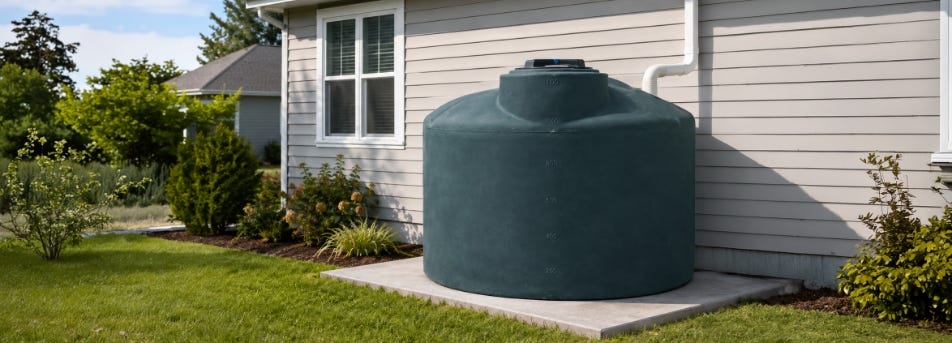
Norwesco 1100 Gallon Vertical Water Tank
A best-selling potable water tank molded from FDA-approved virgin polyethylene in algae-blocking California Green. It carries a 3-year warranty, and NSF certification documents are available on the product page. Capacity: 1,100 gallons (4,164 L).
Choose Certified Storage and Get It Right the First Time
The difference between potable and non-potable storage comes down to proof. Virgin resin you can trace. Certifications you can verify. Fittings that carry the right marks. Tank Depot stocks certified potable cisterns from Norwesco, Snyder Industries, and other leading manufacturers. NSF and FDA documents are posted right on the product pages. Our specialists size systems for households, farms, and commercial sites every day.
Talk to an Expert
Not sure if your project needs a potable-rated cistern? Call 866-926-5603, Monday to Friday, 7am to 7pm CST.


